
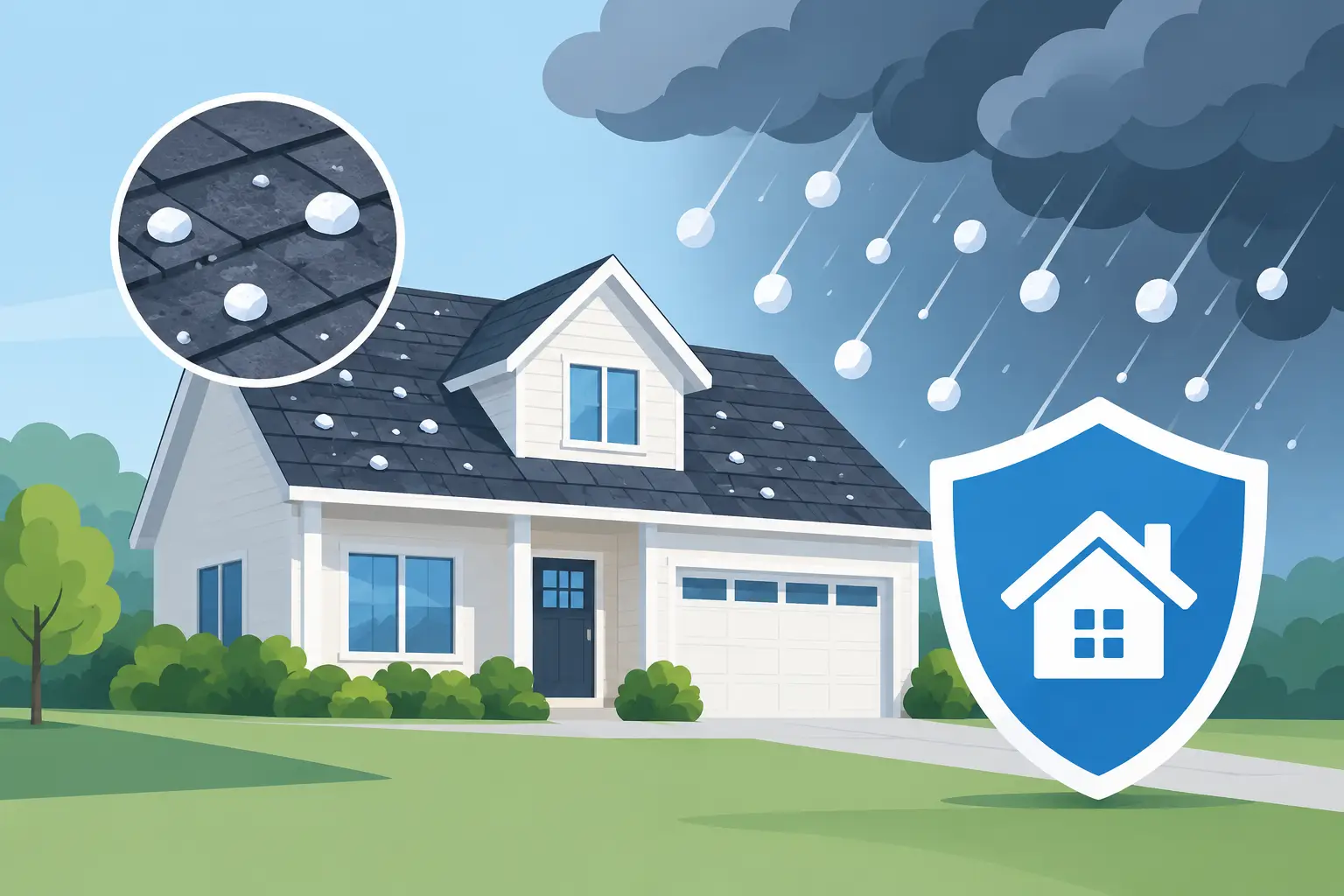
A West Texas hailstorm can leave a roof looking fine from the driveway while causing damage that does not show up until the next hard rain. That is why homeowners often ask, does homeowners insurance cover hail? In many cases, yes. A standard homeowners policy generally covers sudden hail damage to your home and belongings. But the amount paid, the deductible you owe, and the condition of your roof can make a meaningful difference in the outcome.
The best time to understand that difference is before dark clouds start building. A quick review of your policy can help you know what to expect and avoid surprises when you need help most.
Does Homeowners Insurance Cover Hail Damage to Your Home?
Most homeowners insurance policies include coverage for hail as a named covered cause of loss. If hail dents your metal roof, cracks shingles, breaks windows, damages siding, or punctures a skylight, the dwelling portion of your policy may help pay to repair or replace the damaged part of the home.
Coverage can also extend beyond the main house. Detached garages, storage buildings, fences, and other structures may be covered under the other structures portion of your policy. Limits for these structures are often separate from the amount listed for your home itself, so it is worth checking whether that limit fits your property.
Hail that gets inside after damaging the roof or windows can create another layer of loss. For example, if a hail-damaged roof lets rain into a bedroom and damages the ceiling, flooring, and furniture, the policy may cover the resulting interior damage as well. The key is that the water entered because of a covered, sudden event, not because of a long-standing leak or neglected repair.
What Hail Coverage May Pay For
A homeowners policy is not one single bucket of money. Different sections of the policy respond to different kinds of hail damage. Your dwelling coverage is designed for the structure of the house, while personal property coverage can help with belongings inside it.
If hail breaks a window and damages a television, clothing, or furniture, personal property coverage may apply, subject to your deductible and policy limits. Additional living expense coverage may also help if a covered loss makes the home unlivable while repairs are underway. That can include reasonable temporary housing, meals above your normal grocery costs, and certain other extra expenses, depending on the policy.
The way your insurer values damaged property matters, too. Replacement cost coverage generally pays the cost to repair or replace damaged items with similar new materials, subject to policy terms. Actual cash value coverage accounts for depreciation, which means age and wear can reduce the claim payment. A 15-year-old roof, for instance, may be settled differently under an actual cash value endorsement than under replacement cost coverage.
Roof coverage deserves special attention in Texas. Some policies offer replacement cost for roofs, while others may use actual cash value once a roof reaches a certain age or is made of a particular material. Do not assume your neighbor’s coverage is the same as yours, even if your homes look alike.
The Deductible Can Change the Claim Decision
For many homeowners, the biggest surprise after a hailstorm is the deductible. A deductible is the portion of a covered loss you pay before insurance contributes. Some policies have one deductible for all covered losses; others have a separate wind and hail deductible.
A wind and hail deductible may be a flat dollar amount or a percentage of your home’s insured value. A 1% deductible on a home insured for $300,000 equals $3,000. That is very different from a $1,000 flat deductible, especially when repairs are moderate rather than extensive.
Before filing a claim, compare a trustworthy repair estimate with your deductible. If the estimated covered damage is only slightly above the deductible, filing may not be the best choice. On the other hand, visible dents are not the only concern. A qualified roofing professional may identify compromised shingles, flashing, vents, or seals that could lead to bigger trouble later.
When Hail Damage May Not Be Covered
Homeowners insurance is intended for accidental, sudden damage. It is not a maintenance plan. If an insurer finds that a roof was already failing, improperly installed, or worn out from age, it may limit or deny the portion of the claim tied to those existing problems.
Cosmetic damage is another area where coverage can vary. Hail may leave dents in metal roofing, gutters, or siding without affecting how the material performs. Some policies cover cosmetic damage, while others contain exclusions or limitations for it. Read the exact wording of your policy rather than relying on a general rule.
A policy also will not typically pay for damage caused by a separate excluded event just because hail occurred nearby. Flooding from rising water is generally not covered by a standard homeowners policy. Damage to a car is not covered under homeowners insurance either; that is usually addressed through comprehensive coverage on an auto policy.
Normal wear, prior leaks, and damage that was never repaired can complicate a claim. Keeping up with routine roof maintenance and addressing small issues promptly protects your home and gives you a clearer record if a storm causes new damage.
What to Do After a Hailstorm
Start by making sure everyone is safe. Once conditions allow, take photos and videos from the ground of any visible damage, including fallen branches, broken windows, damaged gutters, and water spots inside. Note the date and approximate time of the storm. Do not climb onto a wet or damaged roof to inspect it yourself.
Take reasonable steps to prevent additional damage. If a window is broken or water is entering the home, temporary measures such as covering the opening can be appropriate. Save receipts for materials and emergency repairs. Avoid making permanent repairs or throwing away damaged items before your insurer has had a chance to inspect, unless waiting would create further damage or a safety hazard.
Be cautious with unsolicited contractors who appear right after a storm. A reputable contractor should provide clear information, answer questions, and never pressure you to sign an assignment of benefits or a contract you do not understand. Your insurance company determines covered damage and claim payment, not a door-to-door salesperson.
When you report a claim, be prepared to share what happened, when it occurred, and what you have observed. An adjuster may inspect the property and review repair estimates. Keep a simple file with photos, receipts, claim communications, and notes from conversations. It makes the process easier to follow if questions arise later.
Review Your Policy Before Storm Season
The coverage amount on your home should reflect what it would cost to rebuild, not simply its market price or what you paid years ago. Construction costs, labor costs, roof materials, and home improvements can all affect whether your limits remain adequate.
It is also wise to ask about your roof settlement terms, wind and hail deductible, other structures limit, and personal property coverage. If you have added a workshop, replaced your roof, remodeled a kitchen, or bought higher-value belongings, those changes may call for an update.
An independent local agency can compare available options and explain the trade-offs in plain language. At San Angelo Insurance, we believe a coverage conversation should leave you with clearer answers, not more confusion.
A hailstorm is stressful enough without trying to decode your policy in the middle of it. Take a few minutes now to review your deductible and roof coverage, keep your records in a safe place, and ask questions when something does not make sense. That small bit of preparation can bring real peace of mind when West Texas weather turns quickly.
