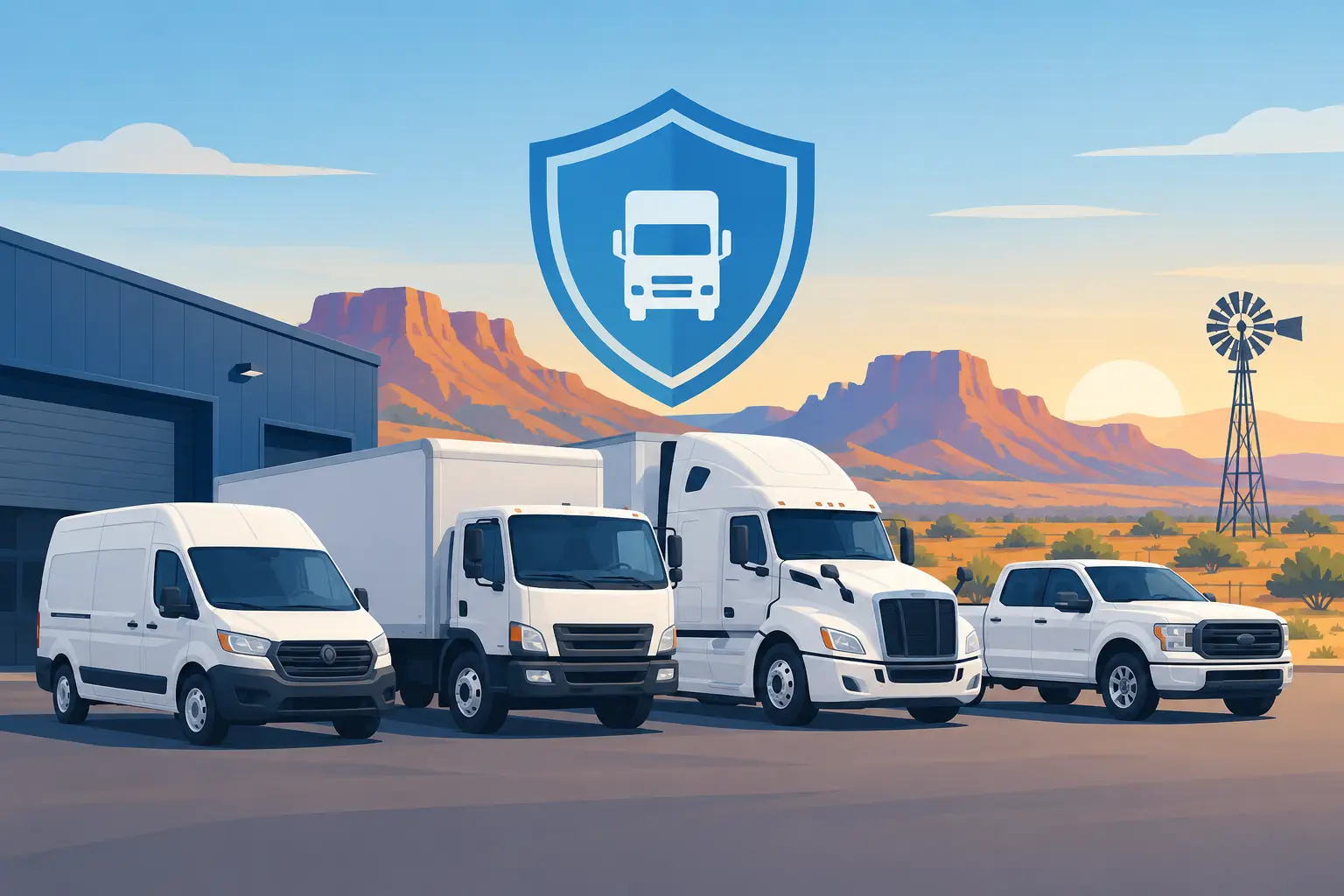
A work truck that cannot leave the yard is more than a vehicle problem. It can mean a missed job, delayed delivery, frustrated customer, and a crew waiting on answers. Commercial fleet insurance helps protect the vehicles your business depends on, whether you run two service vans or a larger group of trucks traveling across West Texas each day.
The right policy is not simply about meeting a contract requirement or carrying a proof-of-insurance card. It should reflect how your vehicles are used, who drives them, what they carry, and what a serious accident could cost your business. A local agent can help turn those details into coverage choices that make sense.
What Is Commercial Fleet Insurance?
Commercial fleet insurance is business auto coverage designed for companies that own, lease, or use multiple vehicles for work. Depending on the insurer, a fleet policy may be available for as few as two or more vehicles. Instead of managing separate policies for every truck, van, car, or trailer, a business can often insure qualifying vehicles under one coordinated policy.
Fleet coverage is used by many kinds of local businesses, including contractors, HVAC and plumbing companies, electricians, delivery services, ranch and agricultural operations, landscapers, home health providers, real estate teams, and professional firms with employees on the road.
The goal is straightforward: protect your business from covered vehicle-related losses while making it easier to add, remove, or update vehicles as your operation changes. The exact structure depends on the carrier and the makeup of your fleet.
Coverage That Can Protect More Than the Vehicle
A commercial auto policy begins with liability coverage. If one of your drivers causes an accident, liability coverage may help pay for injuries or property damage to others, up to your policy limits. In Texas, carrying required minimum limits is one thing. Choosing limits that reasonably protect a growing business is another.
A serious crash involving medical bills, multiple vehicles, or a commercial property claim can exceed low limits quickly. If your company has equipment, payroll, property, contracts, or savings worth protecting, it is worth discussing whether higher liability limits are appropriate.
Physical damage coverage
Collision coverage can help repair or replace a covered company vehicle after it is damaged in a collision, regardless of who caused it. Comprehensive coverage, sometimes called other-than-collision coverage, may help with losses such as hail, theft, fire, vandalism, falling objects, or an animal strike.
For West Texas businesses, weather is not an abstract concern. Hail, high winds, and sudden storms can damage a row of parked work vehicles in one afternoon. Physical damage coverage adds to the premium, so the decision often comes down to the value of the vehicle, any loan or lease requirement, and whether the business could afford to replace it without insurance.
Coverage for uninsured drivers and medical costs
Uninsured and underinsured motorist coverage may help when another driver causes an accident but does not have enough insurance to cover the damage. Medical payments or personal injury protection may also be available to help address certain injury-related expenses for people in your covered vehicle.
These coverages are not identical, and the right choice depends on your employees, your existing health benefits, and your overall risk tolerance. Clear answers matter more than checking a box on a quote form.
Towing, rental reimbursement, and hired vehicles
A disabled truck on a job site can create a costly interruption. Towing and roadside assistance options may help with a covered breakdown situation, while rental reimbursement can help keep operations moving after certain covered losses.
Businesses that rent vehicles, borrow trucks, or send employees on work trips should also ask about hired and non-owned auto liability. A personal vehicle used for a work errand can create a business exposure, even when your company does not own that vehicle. This is especially relevant for employers whose staff visit clients, pick up supplies, or travel between job locations.
The Details That Shape Your Fleet Premium
Insurance companies look beyond the number of vehicles. They want to understand the risk your business is asking them to insure. Two fleets with the same number of trucks can have very different premiums if one stays within San Angelo and the other travels statewide with trailers and heavy equipment.
Your premium may be affected by vehicle types and values, annual mileage, driving territory, business use, cargo, driver ages and records, prior claims, coverage limits, deductibles, and fleet safety practices. A clean driving history generally helps, but one recent loss does not automatically mean good coverage is out of reach. It may mean the options and pricing need more careful comparison.
Be specific when describing how vehicles are used. A pickup used by an owner to visit local customers is different from one that hauls tools, pulls a trailer, and travels to remote work sites. Understating vehicle use can lead to gaps or complications when a claim happens.
Start With a Clear Picture of Your Operation
Before requesting a quote, gather a current vehicle list with vehicle identification numbers, ownership details, and estimated values. Make a list of regular drivers, too, including license information and driving history when available. If employees take vehicles home, use personal vehicles for work, or tow trailers, bring that up early.
It also helps to consider the questions customers and contracts may raise. Do you need specific liability limits to bid on a job? Are vehicles financed? Do you transport expensive tools or materials? Do you cross state lines? Do you need certificates of insurance quickly for general contractors or commercial clients?
A thorough conversation at the beginning can save trouble later. Insurance should follow the real operation, not an oversimplified version of it.
Build Safety Into the Cost Conversation
A fleet insurance policy responds after a covered loss, but a safer operation can reduce the chance of needing it. Written driver expectations, routine vehicle maintenance, prompt repair of windshield damage, and clear rules about distracted driving are practical starting points.
For businesses with several drivers, review motor vehicle records regularly and establish a process for reporting accidents, tickets, or changes in license status. Consider who is authorized to drive each vehicle and whether newer employees should have restrictions until they gain experience.
Telematics and dash cameras can also be worth considering for some fleets. They can provide useful information about driving behavior and may help document what happened after an accident. They are not the right fit for every company, especially where cost or employee privacy concerns are significant, but they can be valuable for fleets with frequent road exposure.
Avoid the Common Coverage Gaps
The biggest fleet insurance mistakes are often not dramatic. They happen when a business grows faster than its policy. A newly purchased truck is put into service before it is reported. A trailer is assumed to be automatically covered. An employee begins using a personal car for deliveries. Tools and equipment are mistaken for vehicle contents when they may need separate inland marine coverage.
There is also a difference between commercial auto liability and broader business protection. A vehicle accident can lead to claims that affect more than the auto policy. Depending on your business, general liability, workers’ compensation, commercial umbrella coverage, and equipment coverage may all play a role in a stronger insurance plan.
An umbrella policy may provide additional liability limits above underlying policies when a large covered claim exceeds those limits. It is not a substitute for proper commercial auto coverage, but it can be an important conversation for businesses with significant assets or higher-risk driving exposure.
Why Carrier Choice Matters for Fleet Coverage
Commercial fleets do not all fit one insurance company’s appetite. One carrier may be more comfortable with local service vehicles, while another may better fit contractors with trailers, higher mileage, or multi-county operations. Coverage forms, deductible choices, underwriting requirements, and pricing can differ substantially.
That is why an independent agency can be helpful. Rather than forcing your business into a one-size-fits-all option, San Angelo Insurance can compare available carrier options and explain the meaningful differences in plain language. The objective is not just to find a lower number. It is to find coverage that supports your business when your drivers and vehicles are needed most.
Your vehicles keep promises to customers every day. Take the time to make sure the insurance behind them is ready to do its part, too.
