
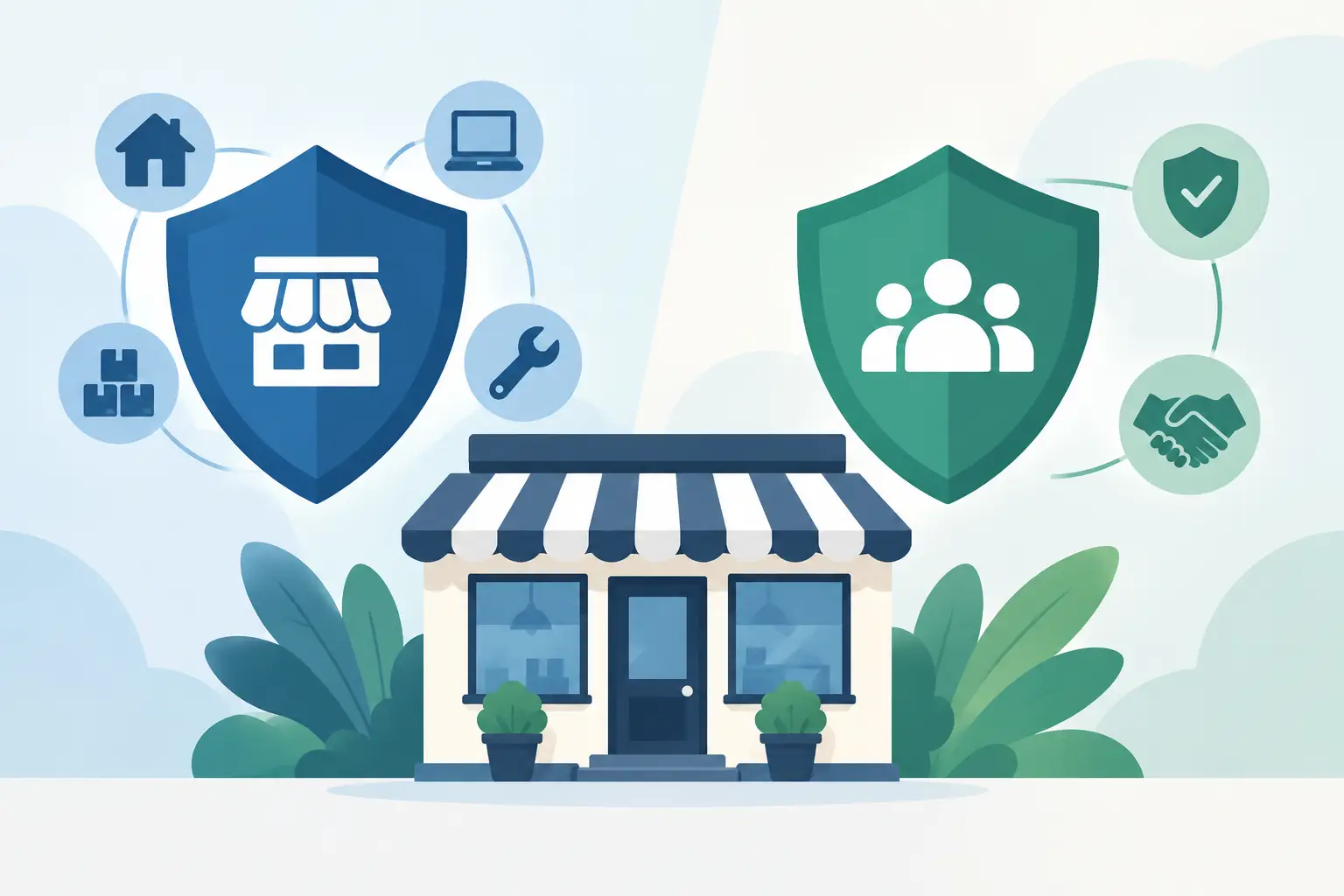
A customer slips at your storefront. A storm damages your tools. A small electrical fire ruins inventory overnight. Each situation can put real pressure on a West Texas business, but they are not protected by the same kind of coverage. That is the central difference in a business owners policy versus liability decision: liability insurance responds when your business may be responsible for injury or damage to others, while a Business Owners Policy can also help protect property your business owns or uses.
For many small businesses, the best answer is not choosing one against the other. It is understanding what each policy does, where its limits are, and whether combining coverages makes practical sense for the way you work.
Business Owners Policy Versus Liability: The Basic Difference
General liability insurance is designed to help with certain claims from other people. If a customer, vendor, or member of the public says your business caused bodily injury, property damage, or certain personal and advertising injuries, general liability may help pay covered legal defense costs, settlements, or judgments up to your policy limits.
A Business Owners Policy, usually called a BOP, commonly combines general liability with commercial property coverage in one package. That property coverage can help with covered damage to your building, business personal property, equipment, inventory, furniture, and other items described in the policy.
Think of it this way. General liability is primarily about your responsibility to others. A BOP addresses that responsibility and adds protection for many of the physical things that keep your business open.
A local retail shop, office, salon, restaurant, or small contractor may find a BOP especially useful because one unexpected event can affect both sides of the business. A customer could be hurt, and your own equipment could be damaged in the same incident. Still, a BOP is not automatically the right fit for every company.
What General Liability Usually Covers
General liability is often a foundation of business insurance because everyday operations create everyday risks. Coverage varies by carrier and policy, but it commonly addresses third-party claims involving bodily injury, property damage, and personal or advertising injury.
For example, a customer may trip over a loose floor mat at your office and suffer an injury. Or an employee working at a client’s home may accidentally damage a countertop while carrying equipment inside. If the claim is covered, general liability can help with the cost of defending your business and paying damages, subject to the policy terms and limits.
It may also help with claims that arise from your completed work. If a contractor finishes a job and a covered issue later causes property damage, completed operations coverage can be an important part of the policy. This is one reason contractors should look beyond the monthly premium and ask how their work is classified.
General liability does not usually pay to repair or replace your own damaged tools, stock, office furniture, or building. It also does not cover every type of lawsuit. Claims involving professional advice, employee injuries, business vehicles, intentional acts, and many cyber events generally need other coverage.
What a Business Owners Policy Can Add
A BOP starts with general liability and adds commercial property protection. Depending on the policy, it may also include business interruption coverage, sometimes called business income coverage.
If a covered fire damages your office or shop, commercial property coverage may help repair the building if you own it, or replace covered business contents such as computers, shelving, supplies, inventory, and equipment. If a covered loss forces you to temporarily close or reduce operations, business income coverage may help replace lost income and pay certain ongoing expenses during the restoration period.
That can matter more than many owners realize. Replacing a laptop is inconvenient. Replacing a laptop, inventory, and several weeks of lost revenue is a different kind of problem.
A BOP can be a cost-effective option for eligible small and midsize businesses because packaged coverage may be priced more favorably than buying liability and property policies separately. Eligibility often depends on factors such as your industry, annual revenue, location, building characteristics, and size of operations.
For instance, a small accounting office with leased space may be a strong BOP candidate. The business has computers, desks, client files, and a location where visitors may come in. A mobile contractor with no office or stored inventory may still need general liability, but may need to build coverage around tools, commercial vehicles, and job-specific risks instead of relying on a standard package.
When Liability Alone May Be Enough
Some businesses need general liability but do not have enough business property or a fixed location to make a BOP the most sensible starting point.
A consultant who works almost entirely from a home office, carries little equipment, and meets clients virtually may choose general liability or professional liability based on their contractual obligations and services. A small lawn care operator may need general liability for work performed at clients’ properties, while tools and trailers may be better addressed through inland marine coverage and commercial auto coverage.
Liability-only coverage can also make sense when a business does not qualify for a BOP due to its type of work. Higher-hazard operations, larger companies, manufacturers, or businesses with specialized exposures may need a commercial package policy or a more customized insurance plan.
The lower initial cost of liability alone can be attractive, especially for a new business. The trade-off is straightforward: if your own property is stolen, damaged by a covered storm, or destroyed in a fire, general liability will not be there to replace it.
The Coverage Gaps Business Owners Should Watch
A BOP is helpful, but it is not a complete insurance program. The name can make it sound broader than it is. Before choosing between a business owners policy versus liability-only coverage, consider the risks that commonly require separate policies or endorsements.
Commercial auto is needed when vehicles are owned, leased, or used for business purposes. A personal auto policy may not fully protect work-related driving, deliveries, employee use, or vehicles titled to the business.
Workers’ compensation helps with employee work injuries. Texas law does not require most private employers to carry workers’ compensation, but that does not mean employee injury risk disappears. Employers should understand both the protection workers’ compensation can offer and the potential consequences of going without it.
Professional liability, also called errors and omissions coverage, matters for businesses that give advice, provide designs, handle client information, or perform professional services. General liability is not built to handle claims that your advice, error, or missed deadline caused a client financial loss.
Cyber liability can be worth discussing if you store customer information, accept card payments, rely on email, or use cloud-based systems. A data breach or ransomware event can bring notification costs, business interruption, and legal expenses that standard liability coverage may not address.
Finally, contractors and equipment-heavy businesses should ask about tools, mobile equipment, and property that travels from job to job. Property coverage within a BOP may have limitations for items away from the premises. Inland marine coverage can be the better answer for equipment that is frequently in a truck, trailer, or worksite.
How to Choose the Right Starting Point
Start with the way money comes into your business and what could interrupt it. Do customers visit your location? Do you own inventory, equipment, or a building? Do you work at client properties? Do your contracts require specific liability limits or additional insured status? Do employees drive, provide advice, or handle sensitive customer information?
Then look at your limits, not just your policy type. A $1 million general liability limit is common, but whether it is sufficient depends on your work, contracts, assets, and claim potential. Some clients or landlords require higher limits, and an umbrella policy may be worth considering when your exposure is greater than standard limits.
Also pay attention to deductibles and valuation. Property claims often involve a deductible, while liability coverage generally works differently. For business property, ask whether replacement cost or actual cash value applies. Replacement cost can be especially meaningful when older equipment must be replaced at current prices.
The right policy should fit your real operation, not a generic description of your industry. A plumber, a boutique owner, a trucking company, and a professional office may all need liability coverage, but their full protection needs are very different.
San Angelo Insurance can help business owners compare carrier options and sort through these details in plain language. An independent review can help identify whether a BOP offers the right value or whether separate policies and endorsements better match your work.
Your business has likely taken years of long days, customer relationships, and careful decisions to build. A quick conversation about where a claim, fire, theft, or vehicle accident could hit hardest can help you choose coverage with greater confidence before you need it.
