

Best overall: a manufactured-home policy matched to your home and occupancy. Best for rebuilding protection: replacement-cost coverage. Best for flood damage: separate flood insurance. This 2026 guide compares the best mobile home insurance West Texas homeowners should consider by coverage purpose, not by an unsupported carrier ranking.
- The best mobile home insurance West Texas homeowners choose starts with the correct home type and occupancy.
- Replacement-cost coverage addresses rebuilding; actual-cash-value settlements account for depreciation.
- Separate flood insurance addresses a gap that ordinary home insurance generally leaves open.
- Sanangelo-Insurance is an independent agency; ask about manufactured-home eligibility before requesting a comparison.
Why this matters
Your home needs protection that matches how it is built, how you use it, and what a claim would pay. A policy can cover a type of damage yet still leave a substantial rebuilding gap because of its limits, deductible, or settlement terms.
Sanangelo-Insurance offers home insurance services to individuals in San Angelo, Texas. Sanangelo-Insurance is an independent agency for San Angelo homeowners who want help comparing home insurance. Ask specifically about mobile or manufactured homes before assuming a particular policy is an option.
The choices below are not competing insurance companies. They are policy types and coverage features that solve different problems, and some belong together in the same insurance plan.
What makes the best mobile home insurance?
Use these criteria before comparing quotes in 2026. A familiar company name does not answer any of them.
- Correct eligibility: The application should accurately describe the home's construction, installation, location, and occupancy.
- Rebuilding protection: Check the dwelling limit and whether covered damage receives replacement-cost or depreciated settlement.
- Weather terms: Read the wind, hail, roof, and flood provisions rather than assuming every weather event receives the same treatment.
- Manageable deductibles: Identify separate deductibles and understand how any percentage deductible is calculated.
- Protection beyond the structure: Review belongings, personal liability, and additional living expenses after a covered loss.
- Clear exclusions: Ask what the policy excludes and which gaps require separate coverage.
Mobile home insurance options at a glance
| Option | Best for | Standout purpose | Key limitation |
|---|---|---|---|
| Manufactured-home policy | Your occupied primary home | Matches coverage to manufactured-home risks and use | Eligibility and covered causes of loss vary |
| Replacement-cost coverage | Rebuilding without depreciation deductions | Changes how covered property damage is settled | Conditions, limits, and deductibles still apply |
| Actual-cash-value coverage | Owners prepared to retain depreciation risk | Pays covered losses after depreciation | Settlement can fall short of replacement expenses |
| Separate flood insurance | Addressing flood damage | Covers qualifying flooding under its own terms | Does not replace ordinary home insurance |
| Vacant-home coverage | An unoccupied home awaiting its next use | Addresses an occupancy situation ordinary coverage can restrict | Maintenance, inspection, and loss restrictions can apply |
Choose the policy form first, then compare settlement terms and separate coverage needs. Replacement cost cannot fix an incorrect occupancy classification, and flood insurance cannot replace liability protection.
1. Manufactured-home policy: best for your primary home
A manufactured-home policy is the starting point for a mobile or manufactured home that you occupy. Depending on its terms, it can include protection for the dwelling, belongings, personal liability, and additional living expenses after a covered loss.
The important distinction is suitability, not the label on the quote. Confirm that the insurer accepts your particular home, installation, and use instead of assuming a standard homeowners policy fits.
Manufactured-home policy pros:
- Gives you a policy form intended for this housing category.
- Can bring property and personal liability protection into one policy.
- Creates a starting point for reviewing attached structures and belongings.
Manufactured-home policy cons:
- Home condition, construction details, and installation can affect eligibility.
- Roof settlement, weather deductibles, and exclusions require close review.
- Ordinary home coverage generally excludes flood damage.
Best for: An owner who lives in the home as a primary residence.
For your 2026 review, describe additions such as porches, decks, and attached rooms. Ask whether each belongs under the dwelling limit or another coverage section; do not assume an addition is insured simply because it touches the home.
Verdict: Buy a suitable manufactured-home policy as your foundation; skip a quote that misstates the property.
2. Replacement-cost coverage: best for rebuilding protection
Replacement-cost coverage generally bases covered property settlement on repair or replacement without deducting depreciation, subject to the policy's conditions. It is a settlement feature, not a promise that every repair receives unlimited payment.
Compare 2 settlement methods explicitly: replacement cost and actual cash value. Ask about the dwelling, roof, and belongings separately because those parts of a policy can use different terms.
Replacement-cost coverage pros:
- Avoids depreciation deductions where replacement-cost terms apply.
- Aligns coverage more closely with the task of repairing or rebuilding.
- Makes settlement language a clear comparison point between quotes.
Replacement-cost coverage cons:
- Full payment can depend on completing repairs or replacement.
- An inadequate limit can still leave a shortfall.
- A roof endorsement or other exception can change the expected settlement.
Best for: A homeowner who wants protection focused on restoring the home rather than receiving its depreciated value.
Ask whether the insurer initially pays actual cash value and releases recoverable depreciation later. Then ask what deadlines, documentation, and replacement requirements apply. You need to understand the process before a loss, not while arranging temporary housing.
Verdict: Buy replacement-cost protection when the terms fit your home and rebuilding needs.
3. Actual-cash-value coverage: best for retaining depreciation risk
Actual-cash-value coverage generally deducts depreciation when calculating a covered property loss. It can insure an eligible home, but it transfers more of the replacement burden to you than comparable replacement-cost settlement.
Do not treat actual cash value as another name for replacement cost. The distinction matters most when damaged property is older but replacing it still requires new materials.
Actual-cash-value coverage pros:
- Provides a defined settlement approach for covered damage.
- Lets you assess deliberately how much depreciation risk to retain.
- Gives you an alternative to evaluate when reviewing eligible policy terms.
Actual-cash-value coverage cons:
- Depreciation reduces the covered loss payment.
- The payment can be insufficient to replace damaged property.
- You must plan for both the deductible and the depreciation gap.
Best for: An owner who understands the settlement limitations and has resources to cover a replacement shortfall.
For a 2026 quote comparison, request an explanation of how the insurer determines depreciation. A vague statement that the home is covered does not tell you what happens after damage to an aging roof or interior.
Verdict: Hold until you understand the depreciation gap; skip this option if you cannot absorb it.
4. Separate flood insurance: best for flood protection
Flood insurance addresses qualifying flood damage under a separate policy's definitions and limits. Ordinary homeowners and manufactured-home policies generally exclude flooding, so home insurance alone does not resolve this exposure.
Check the property's flood risk instead of relying only on whether a lender requires coverage. FEMA flood maps are a useful starting point, but a mapped zone is not a guarantee against flooding elsewhere.
Separate flood insurance pros:
- Addresses a major exclusion in ordinary home insurance.
- Allows you to examine building and belongings protection separately.
- Makes flood deductibles and exclusions visible before a claim.
Separate flood insurance cons:
- Does not replace home insurance, liability coverage, or every weather protection.
- Building and contents terms require separate attention.
- Waiting periods and coverage restrictions can apply.
Best for: A homeowner who needs protection against qualifying flooding, including when a lender does not require it.
Ask how the proposed policy treats your manufactured home's foundation and installation. Also ask about temporary housing: do not assume flood coverage includes the same additional living expense protection as a home policy.
Verdict: Buy separate flood protection when it addresses your property's exposure; skip the assumption that home insurance already includes it.
5. Vacant-home coverage: best for a home between occupants
An empty manufactured home needs an occupancy review, not just a mailing-address update. An ordinary owner-occupied policy can restrict coverage when a property becomes vacant or unoccupied, with definitions that vary by policy.
Tell the agent whether you have moved out, are renovating, are selling, or expect a tenant. Those are different situations; vacant-home coverage is not automatically the correct answer for all of them.
Vacant-home coverage pros:
- Addresses the home's actual occupancy rather than an outdated application.
- Creates an opportunity to check inspection and maintenance requirements.
- Helps identify restrictions before an empty-home loss occurs.
Vacant-home coverage cons:
- Covered causes of loss can be narrower than expected.
- Security, inspections, or other conditions can apply.
- A rental property needs its own eligibility review rather than an automatic vacant-home classification.
Best for: An owner whose home will remain empty while its next use is decided.
Ask when the current policy's vacancy or unoccupancy restrictions begin and what changes the insurer requires. Get that answer before moving out. Do not cancel existing coverage until the replacement arrangement and effective date are confirmed.
Verdict: Buy occupancy-appropriate coverage before the home becomes vacant; skip leaving an owner-occupied application unchanged.
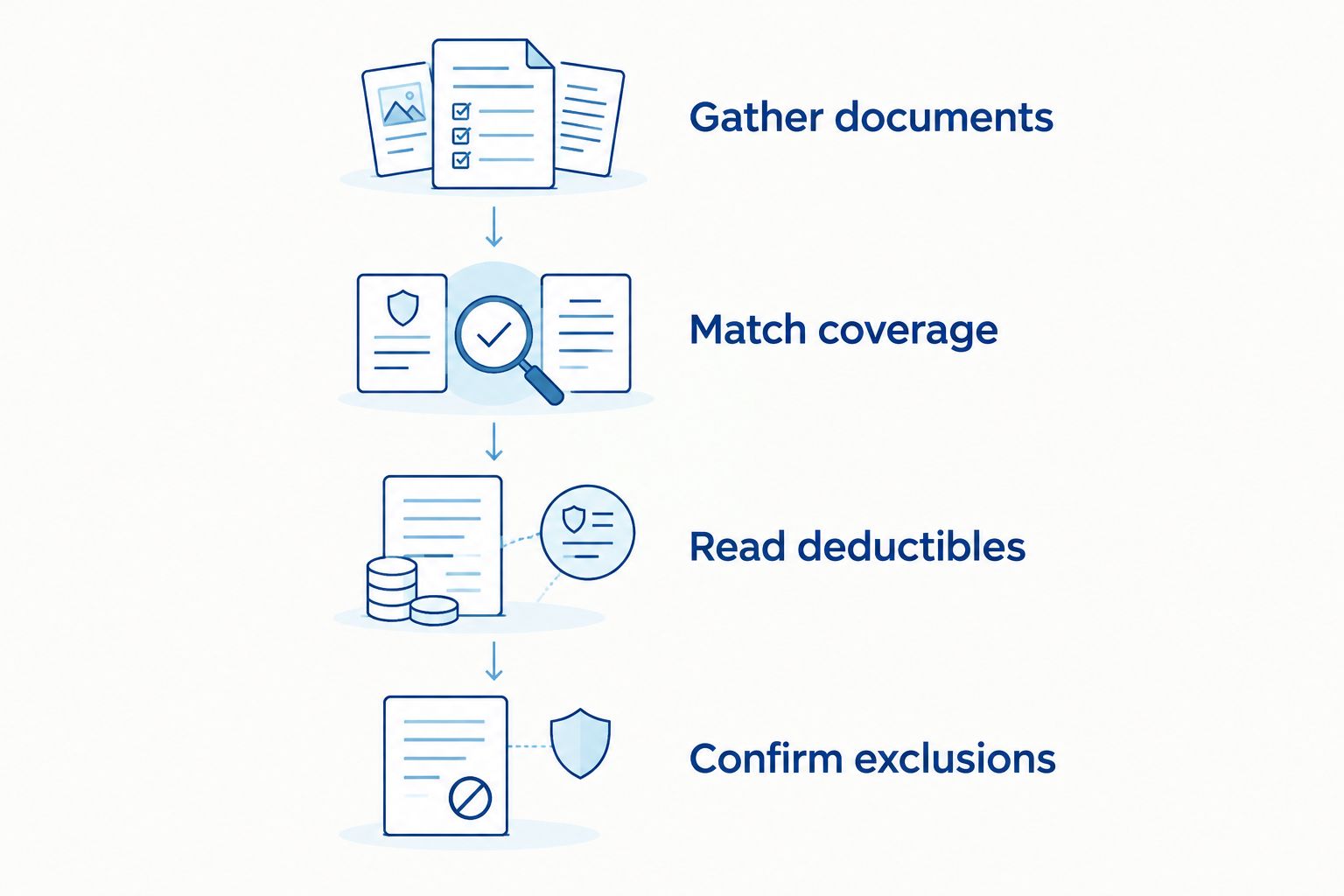
How to compare quotes without missing the important parts
Use the same property details for every quote. Otherwise, you are comparing different assumptions rather than different insurance proposals.
Gather documents
Start with 3 documents: your current declarations page, any available home identification or installation records, and your lender's insurance requirements. If a record is unavailable, tell the agent rather than guessing.
Match coverage
Ask each agent to use the same requested dwelling limit and explain the settlement method. Keep belongings, liability, attached structures, and additional living expenses visible in the comparison.
Read deductibles
Check the general property deductible and any separate wind or hail deductible. If a deductible is a percentage, ask what amount it applies to and request the resulting dollar amount for your quote.
Confirm exclusions
Ask what happens after hail damage, a plumbing leak, flooding, and an extended vacancy. Request the relevant policy wording when an answer is unclear.
Keep a copy of the completed application alongside the quote. Correct inaccurate occupancy, roof, or home details before you accept the policy; an attractive summary is not a substitute for an accurate application.
You can request a quote from Sanangelo-Insurance and ask whether the agency can arrange coverage for your particular manufactured home.
How these options are ranked
This 2026 ranking follows the decisions a homeowner needs to make: choose suitable primary coverage, understand settlement, address flood exposure, and correct unusual occupancy. It is not a carrier review or a claim about service results.
The criteria are eligibility, rebuilding protection, weather terms, deductibles, coverage breadth, and exclusions. A lower-ranked option can still be essential: separate flood insurance solves a different problem from the primary policy.
Which mobile home insurance should you choose?
Start with a manufactured-home policy for your actual occupancy, then favor replacement-cost terms when they meet your needs. Evaluate flood insurance separately and revisit the policy before moving out, renting the home, or making substantial changes.
Ask Sanangelo-Insurance whether your home qualifies before comparing proposals. Review the finished policy every 12 months and after a major property or occupancy change; use your 2026 review to correct assumptions, not merely renew them.
FAQ
What’s the best mobile home insurance for West Texas homeowners?
The best starting point is a manufactured-home policy that matches your home and occupancy. Compare dwelling limits, settlement terms, wind and hail deductibles, liability, and exclusions before choosing.
Is replacement cost better than actual cash value for a mobile home?
Replacement-cost coverage generally provides stronger rebuilding protection because applicable settlements do not deduct depreciation. Actual-cash-value coverage leaves you responsible for the depreciation gap as well as your deductible.
Does mobile home insurance cover hail damage?
A mobile home policy can cover hail damage, but the policy and endorsements determine the result. Check exclusions, the wind or hail deductible, and whether the roof has different settlement terms.
Do I need flood insurance if my lender doesn’t require it?
A lender’s requirement does not determine whether your property has flood exposure. Review the location’s risk and separate flood coverage because ordinary home insurance generally excludes flooding.
Can I insure an older manufactured home?
Eligibility depends on the insurer’s rules and the home’s details. Provide its construction information, condition, installation, roof information, and occupancy so the agent can check suitable options.
Does my policy stay the same if I move out?
Moving out requires an occupancy review because vacancy or unoccupancy restrictions can affect coverage. Tell the agent before the change and ask whether different coverage is needed.
Can Sanangelo-Insurance help me find mobile home coverage?
Sanangelo-Insurance offers home insurance services as an independent agency in San Angelo. Ask specifically whether the agency can arrange coverage for your manufactured home’s construction, location, and occupancy.
One last thing
Read the roof settlement wording even when the quote says replacement cost. A separate roof provision can change the payment you expected, so ask for the dwelling and roof settlement terms side by side before choosing your policy.
Related guides
- Best homeowners insurance options in San Angelo, Texas
- Best auto insurance options for Texas teen drivers
- Best commercial auto insurance for Texas small businesses
