
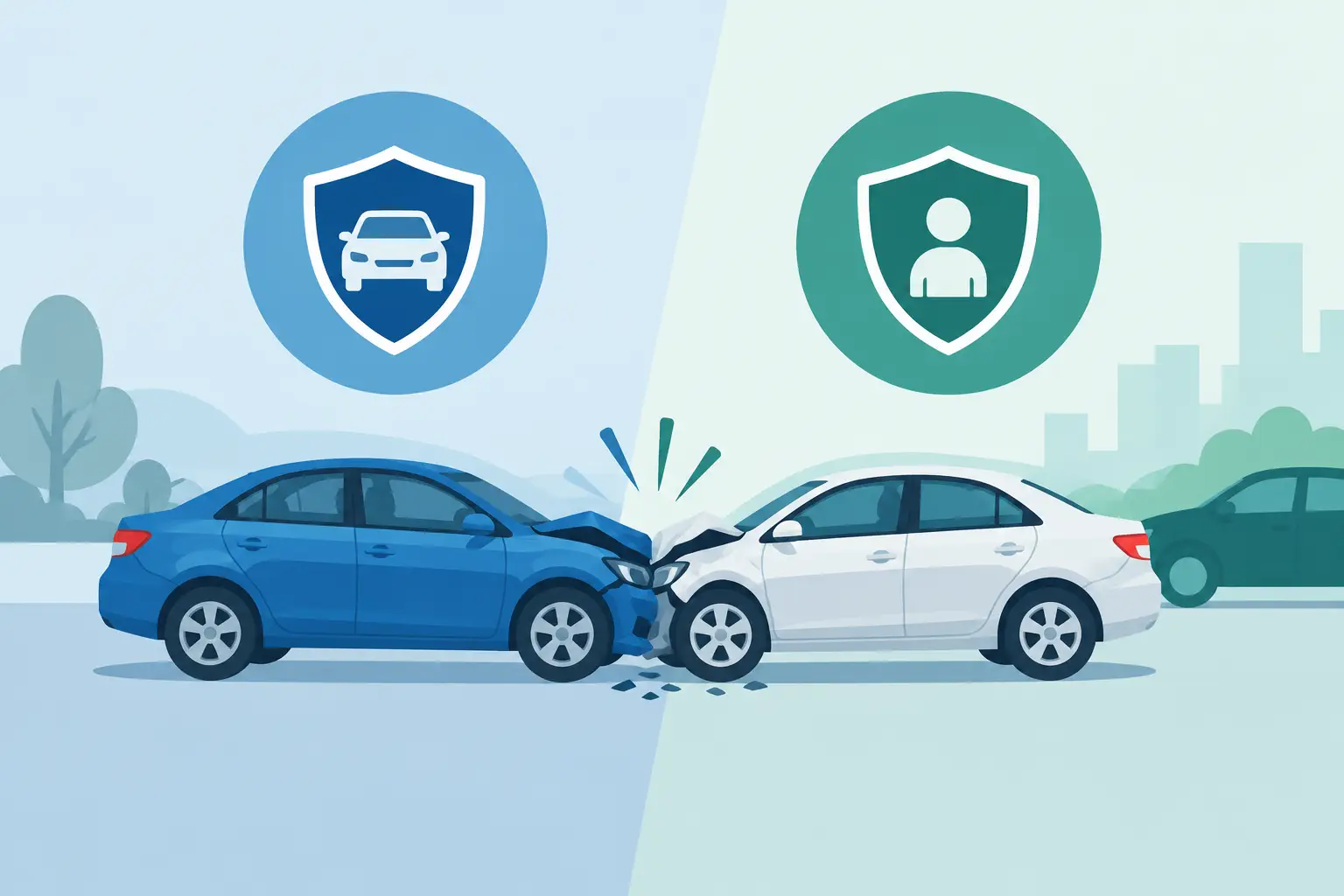
A fender bender at a San Angelo intersection can raise a costly question fast: does your policy pay for your vehicle, the other driver’s vehicle, or both? The difference between collision versus liability coverage comes down to whose damage is covered and who is responsible for the accident. Both matter, but they serve very different jobs on an auto policy.
Liability coverage helps pay for injuries and property damage you cause to others. Collision coverage helps pay to repair or replace your own vehicle after a crash, regardless of fault. Knowing that distinction can help you avoid a painful surprise when it is time to file a claim.
Collision Versus Liability: The Core Difference
Liability insurance is the foundation of auto coverage in Texas. If you cause an accident, your liability coverage may pay for the other person’s medical bills, lost wages, vehicle repairs, and damaged property, up to your policy limits. It is designed to protect you from the financial responsibility of harming someone else or damaging what they own.
Collision coverage is for your car. If you hit another vehicle, back into a pole, slide off a wet road, or roll your truck on a rural highway, collision coverage can help pay for the damage to your vehicle. It generally applies whether the accident was your fault or not, subject to your deductible and your vehicle’s actual cash value.
Here is the part many drivers miss: liability coverage does not pay to fix your own car when you cause the accident. If you only carry liability and you rear-end another driver, your insurer may pay for their damage, but your repair bill is yours to handle.
What Liability Coverage Pays For
Texas requires drivers to carry a minimum amount of liability insurance. The commonly stated minimum is 30/60/25: $30,000 for bodily injury per person, $60,000 for bodily injury per accident, and $25,000 for property damage per accident.
Those figures are a legal starting point, not necessarily a comfortable level of protection. A newer pickup, a multi-car accident, or even a moderate injury claim can exceed those limits quickly. When damages go beyond your limits, you may be personally responsible for the remaining amount.
Liability is usually divided into two parts. Bodily injury liability helps when another person is injured in an accident you caused. Property damage liability helps repair or replace another person’s vehicle and may also cover items such as a fence, mailbox, building, or utility pole that you damage.
For example, suppose you pull out of a parking lot and hit an SUV. Your property damage liability may pay for the SUV’s repairs. If the driver is hurt, bodily injury liability may address covered injury-related costs. But neither part pays to repair the front end of your own vehicle. That is where collision coverage could help.
What Collision Coverage Pays For
Collision coverage pays for damage to your covered vehicle caused by an impact with another vehicle or object, or by a rollover. It can be especially valuable when you depend on your vehicle to get to work, take children to school, run a business, or travel the long distances common in West Texas.
You choose a deductible when you buy collision coverage. The deductible is the amount you pay out of pocket before the coverage contributes to a covered repair. With a $500 deductible and $4,000 in covered collision damage, the insurer would generally pay $3,500. A higher deductible can lower your premium, but it also means taking on more expense after a claim.
Collision coverage is not unlimited. If your vehicle is totaled, the payment is generally based on its actual cash value at the time of the loss, minus your deductible. It is not automatically based on what you originally paid, what you still owe on a loan, or the cost of buying a brand-new replacement.
That last point matters for financed vehicles. If you owe more than the vehicle is worth, collision alone may leave a gap after a total loss. Gap coverage, when available and appropriate, is a separate protection worth discussing for some drivers.
When the Other Driver Is at Fault
If another driver causes the crash, you may be able to make a claim against that driver’s property damage liability coverage for your vehicle repairs. In a clear-cut accident with an insured driver, that may be the most direct path.
Still, claims can take time when fault is disputed, the other insurer is investigating, or the driver has insufficient coverage. If you carry collision, you may choose to use it to get your vehicle repaired sooner, then let your insurer seek repayment from the at-fault party’s insurer. If your insurer recovers your deductible, it may be returned to you, though the timing and outcome can vary.
This is one reason collision can provide peace of mind even to careful drivers. You cannot control another person’s attention behind the wheel, their insurance limits, or whether they have insurance at all.
Liability, Collision, and Other Coverage Gaps
Collision does not cover every type of damage to your vehicle. Hail, theft, fire, flooding, falling objects, and animal strikes are generally handled under comprehensive coverage, also called other-than-collision coverage. That distinction is particularly relevant in Texas, where hailstorms and deer on rural roads can create expensive damage without another car being involved.
Uninsured and underinsured motorist coverage can also be valuable. It may help when another driver causes an accident but has no insurance or not enough coverage to pay for the loss. The exact protection depends on the coverage options and limits selected.
Medical payments coverage and personal injury protection can help with certain medical expenses for you and your passengers, regardless of fault. These coverages are separate from liability and collision. A well-built policy looks at the full picture instead of treating one coverage as a substitute for another.
Do You Need Collision Coverage?
There is no one right answer for every vehicle or household. If your vehicle is leased or financed, your lender or leasing company will usually require collision and comprehensive coverage. Once a vehicle is paid off, the decision becomes more personal.
Collision is often worth considering when the vehicle has meaningful value and you could not comfortably replace it after an accident. It can also make sense when your vehicle is essential to daily life, even if it is older. A paid-off truck may not be new, but losing it unexpectedly can still create a real hardship.
On the other hand, dropping collision may be reasonable for a low-value vehicle when the annual premium and deductible add up to a large share of what the car is worth. Before removing it, ask yourself a practical question: if this vehicle were totaled tomorrow, could I replace it without creating financial strain?
Your answer may change over time. Vehicle values, savings, loan balances, household needs, and premiums all change. Reviewing your auto coverage at renewal or after a major life change is a sensible habit.
Choosing Limits and Deductibles With Care
A lower premium is helpful, but the cheapest policy can become expensive after a serious accident. Higher liability limits can offer stronger protection for your savings, income, and future plans. An umbrella policy may also be worth considering for households with assets or higher liability exposure.
For collision, select a deductible you could realistically pay after an accident. Choosing a $1,000 deductible can reduce the premium, but it only works if you have $1,000 available when you need repairs. There is no benefit in choosing a deductible that leaves you unable to get your vehicle back on the road.
It also helps to compare more than one carrier’s price and coverage approach. A local independent agent can explain the differences in plain language, review available options, and help balance protection with a budget that makes sense for your family.
A Simple Way to Remember the Difference
Think of liability as coverage for the damage you cause to other people and their property. Think of collision as coverage for damage to your own vehicle from an accident. One protects you from the cost of harming others; the other helps protect the vehicle you rely on every day.
If you are unsure whether your current policy has collision, look at your declarations page or ask for a coverage review. San Angelo Insurance can help you compare choices without making the conversation more complicated than it needs to be. The best auto policy is one you understand before a crash leaves you wishing you had asked.
