
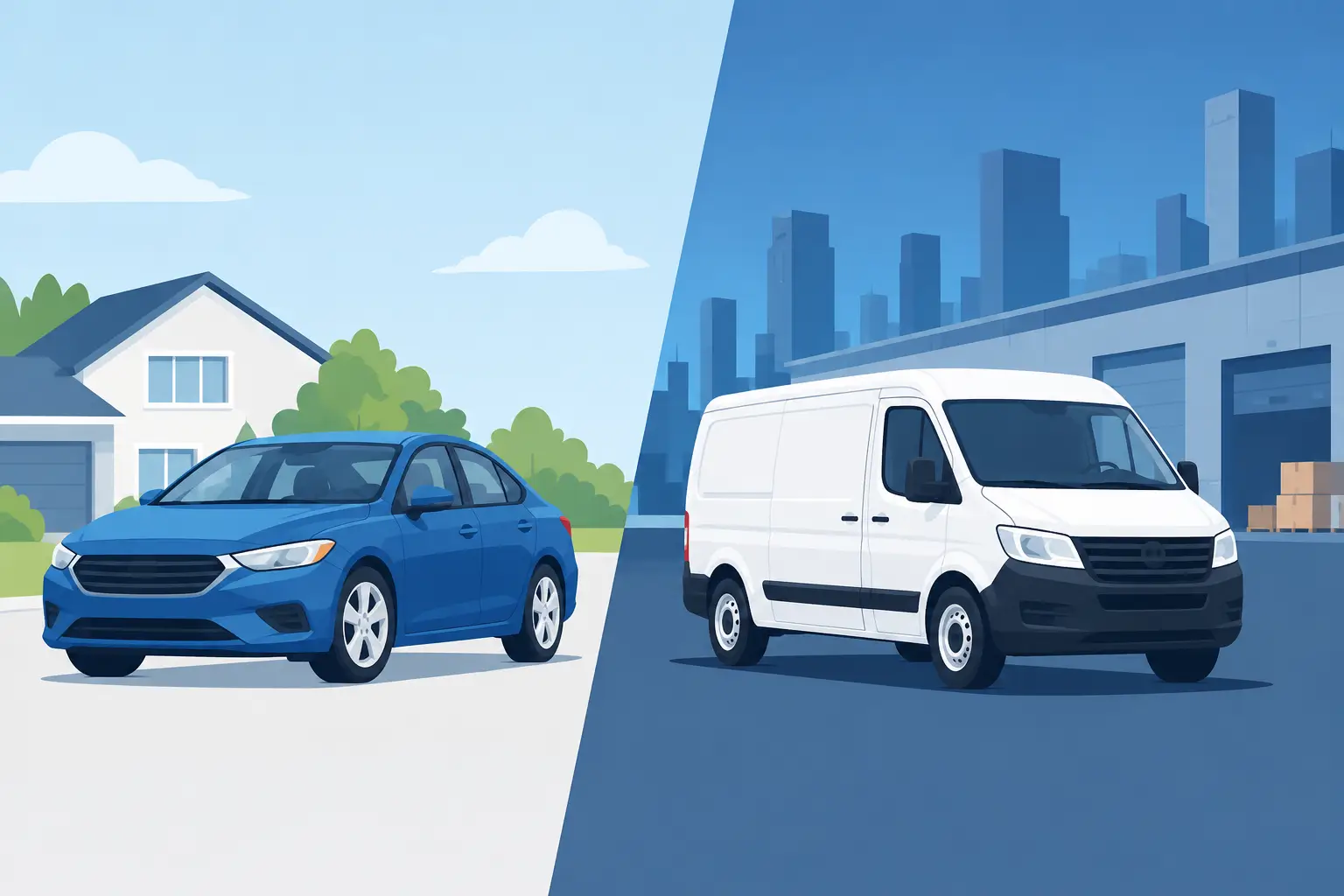
A truck can look like a personal vehicle in the driveway and become a business tool by 8 a.m. That difference matters when comparing personal auto versus commercial auto coverage. If a crash happens while you are heading to a job site, hauling equipment, making deliveries, or carrying clients, the policy on the vehicle may not respond the way you expect.
For many West Texas families and business owners, the right answer is not based on the vehicle alone. It depends on who owns it, how it is used, who drives it, and how much risk that use creates. Getting those details right before a claim is one of the simplest ways to protect your livelihood.
Personal Auto Versus Commercial Auto: The Main Difference
Personal auto insurance is designed for everyday driving. It typically covers vehicles used for commuting, errands, family travel, and other personal purposes. You can generally add household drivers and select liability, collision, comprehensive, uninsured motorist, and medical-related coverages based on your needs.
Commercial auto insurance is built for vehicles used in connection with a business. It may cover cars, pickups, vans, service vehicles, and larger work vehicles, depending on the policy and the business. It can also be structured around business ownership, employee drivers, higher liability needs, specialized equipment, and the demands of regular work travel.
The key issue is not whether you occasionally answer a work call from your truck. Insurance companies look at the full picture. A real estate agent driving to showings, a contractor traveling between job sites, and a florist making daily deliveries may all have different insurance needs, even if each drives a pickup or sedan.
When a Personal Auto Policy May Be Enough
A personal policy can often fit someone who drives to and from one regular workplace and does not use the vehicle as part of the business operation. Many employees commute in their own cars every day without needing commercial auto coverage.
Some limited business-related driving may also be acceptable under certain personal policies. For example, an office employee who occasionally drives to a lunch meeting may still be properly insured under a personal policy. But acceptable use is not something to assume. Policy language, carrier guidelines, vehicle type, and the nature of the work all matter.
A personal policy may be a reasonable fit when the vehicle is titled personally, used mostly for personal and commuting purposes, and not used to transport people or property for a fee. Even then, be honest about how the vehicle is used when requesting a quote or making a policy change. An accurate description gives your agent the chance to identify a problem before it becomes an expensive surprise.
Commuting Is Different From Working From the Road
Commuting means traveling between home and a regular place of work. Working from the road means the vehicle is part of how the business earns money or serves customers.
That line can become blurry. A plumber who drives a personal pickup to one office each day has a different exposure from a plumber who carries tools, visits several customers, and sends an apprentice to pick up supplies. The second situation creates more time on the road, more potential drivers, and more opportunity for a claim tied directly to the business.
Signs You May Need Commercial Auto Insurance
Commercial coverage deserves a closer look when a vehicle is central to your work rather than simply a way to get to work. Regular deliveries, job-site travel, transporting tools or materials, and visiting multiple customers are common examples.
You should also ask about commercial auto if the vehicle is owned or leased by a business, has a business name or logo on it, is driven by employees, or is used to transport customers. A higher-value contract, landlord requirement, or client agreement may also call for liability limits beyond what a personal policy provides.
These uses do not automatically mean the same policy or limit works for every business. A local HVAC company, a ranch operation, a mobile notary, and a catering business have different vehicle exposures. The right conversation starts with the facts: what is driven, where it goes, what it carries, and who has access to the keys.
Business Use That Often Requires Special Attention
Certain activities can fall outside standard personal auto coverage or face strict carrier rules. Rideshare driving, food delivery, package delivery, and transporting passengers for a charge are examples where coverage can change quickly. App-based platforms may provide some insurance during parts of a trip, but that coverage can be limited and may not replace a policy designed for your full exposure.
Hauling equipment, pulling trailers, carrying hazardous materials, or operating heavier vehicles can also require specialized commercial coverage. Do not wait until you have a new contract, hire a driver, or purchase a work vehicle to ask. A quick review before the change can help you make a confident decision.
Why Commercial Auto Can Offer More Than Higher Limits
Commercial auto insurance is often associated with higher liability limits, and that is a major benefit. A business may have more assets to protect and more financial responsibility after a serious accident. Higher limits can help address injuries, property damage, legal defense, and related costs, subject to the policy terms.
But limits are only part of the value. Commercial policies can be written for multiple vehicles and drivers, including employees who may not live in the same household. They may include coverage options for hired vehicles, non-owned vehicles, rented vehicles, towing, rental reimbursement, and physical damage. Availability varies by carrier and business type.
Consider a small construction company whose employees sometimes use their own vehicles to pick up materials. The company may have exposure even though it does not own every vehicle involved. A commercial policy with the appropriate non-owned auto coverage can be worth discussing. The same is true for a business that rents a van for an occasional event or sends an employee on an out-of-town errand.
The Cost Question: Cheaper Is Not Always Less Expensive
Personal auto insurance is often less expensive because it is priced for more limited use and a different level of risk. Commercial auto can cost more due to higher mileage, employee drivers, business equipment, vehicle size, travel radius, and chosen liability limits.
That does not mean every business should automatically buy the broadest policy available. A one-person business with a single sedan has different needs from a fleet of service trucks. The goal is to match coverage to the real exposure, not to pay for features that do not fit and not to leave a meaningful gap simply because a personal policy had a lower premium.
A claim denial or coverage dispute can cost far more than the difference between two premiums. Clear information at the start helps an independent agent compare carriers and policy options based on both protection and budget.
Questions to Ask Before You Choose
Start with ownership. Is the vehicle in your name, your company’s name, or both? Then consider use. Do you drive to one office, travel between job sites, deliver products, transport people, or carry tools and materials?
Next, think about drivers. Will employees, partners, family members, or temporary workers get behind the wheel? Finally, consider contracts and consequences. Would an accident put a customer relationship, a business asset, or your family’s finances at risk?
Bring those answers to an insurance conversation. It is far more helpful to say, “I use my pickup to visit three job sites a day and occasionally pull a trailer,” than simply, “I use it for work.” Details allow the policy to be quoted correctly.
Get a Clear Answer Before the Road Gets Busy
There is no benefit to guessing where personal use ends and business use begins. Your situation can change quickly when you add a driver, begin deliveries, buy a trailer, or turn a side job into a growing business.
At San Angelo Insurance, we believe insurance questions deserve a straight answer from someone who listens. A local review can help you compare appropriate personal and commercial options across carriers and understand what fits your vehicles, work, and budget. Before the next job, delivery, or long drive, make sure your coverage is traveling with you for the right reasons.
