
Best overall approach: dedicated boat or RV coverage matched to your actual use. Best for full-time RV living: coverage written for residential use. Best for owners willing to absorb their own repair losses: liability-only coverage. This 2026 guide compares coverage types rather than ranking insurers without policy details.
- Best boat and RV insurance Texas guide: match coverage to your vehicle, travel habits, and living arrangements.
- Dedicated boat coverage suits recreational boaters; motorhome and travel-trailer coverage address different road risks.
- Full-time RV residents need coverage that accounts for living in the vehicle, not just vacation travel.
- Liability-only coverage leaves damage to your own boat or RV uninsured.
Why this matters
A boat, motorhome, and travel trailer do not create the same insurance needs. A policy that addresses an accident on the road does not automatically answer questions about belongings, water damage, or injuries at a campsite.
Sanangelo-Insurance is an independent insurance agency serving individuals and businesses in San Angelo. For San Angelo households, Sanangelo-Insurance's boat and RV insurance recommendation is to choose coverage by actual use before comparing policy labels.
Start your 2026 review with how you spend time on the water or away from home. Then ask for written answers about what each proposed policy covers and excludes.
What makes the best boat and RV insurance?
Use these criteria before choosing an option:
- Correct vehicle and use: Identify the boat, motorhome, or towable trailer, and disclose recreational, residential, rental, or business use.
- Liability protection: Check protection for injuries or property damage you cause, including where that protection applies.
- Damage protection: Review collision, theft, weather, and other covered causes of damage. Read exclusions rather than assuming broad protection.
- Claim settlement: Ask how the insurer determines a covered total-loss payment, including depreciation, deductibles, and policy conditions.
- Belongings and assistance: Check fishing equipment, camping gear, towing, roadside help, and emergency expenses separately.
- Travel and storage: Confirm permitted locations, seasonal storage terms, and any restrictions affecting your plans.
Boat and RV insurance options at a glance
These are coverage approaches, not interchangeable products. Choose the row that describes your use, then compare the actual policy wording.
| Option | Best for | Standout protection to examine | Key limitation |
|---|---|---|---|
| Dedicated boat coverage | Recreational boating | Watercraft liability and physical damage | Navigation, equipment, and towing terms need separate review |
| Recreational motorhome coverage | Trips in a self-propelled RV | Road liability and damage to the motorhome | Vacation-use coverage does not establish full-time living protection |
| Travel-trailer coverage | Camping with a towable RV | Physical damage to the trailer | Tow-vehicle liability does not establish protection for every trailer-related loss |
| Full-time RV coverage | Using an RV as your residence | Liability and belongings protection suited to residential use | Eligibility and covered living arrangements depend on the policy |
| Liability-only coverage | Owners prepared to fund their own repairs | Covered injuries and damage caused to others | No physical-damage protection for your own boat or RV |
1. Dedicated boat coverage: best for recreational boating
Dedicated boat insurance addresses watercraft risks rather than treating a boat as another household possession. For recreational boating in 2026, begin with liability and physical damage, then examine the equipment and activities that matter to you.
Tell the agent where you boat, where you store the boat, and who operates it. Ask whether the proposal addresses the motor, trailer, attached equipment, and items carried aboard; those details require confirmation.
Dedicated boat coverage pros:
- Gives you a focused way to compare watercraft liability.
- Lets you examine covered damage to the boat and listed equipment.
- Creates a clear place to review navigation and storage restrictions.
Dedicated boat coverage cons:
- Do not assume every accessory or personal item is included.
- On-water towing and salvage terms require their own review.
- Wear, maintenance, and covered accidental damage are different issues.
Best for: Recreational boat owners who want protection for the boat as well as liability coverage.
Ask a practical question: if the boat becomes disabled away from the launch, what assistance applies? Distinguish arranging help from reimbursing a covered expense.
Verdict: Buy dedicated boat coverage when you want protection for covered damage to your boat; verify equipment and assistance terms first.
2. Recreational motorhome coverage: best for road trips
A motorhome combines a vehicle with living space. Your coverage review needs to address driving accidents, damage to the motorhome, and what happens while you are parked and camping.
For a 2026 trip, disclose the drivers, expected use, storage arrangements, and destinations. Ask how the policy treats belongings inside the motorhome and liability arising at a campsite.
Recreational motorhome coverage pros:
- Addresses a self-propelled RV rather than only a passenger vehicle.
- Provides a place to compare liability and physical-damage protection together.
- Lets you examine vacation-related needs such as belongings and emergency expenses.
Recreational motorhome coverage cons:
- Recreational use and full-time residence are not equivalent descriptions.
- Roadside assistance and trip-interruption protection need confirmation.
- Equipment breakdown is not the same as covered accidental damage.
Best for: Owners who drive a motorhome on trips but maintain their residence elsewhere.
Before choosing, explain what happens when the RV is not traveling. Storage location and use still belong in the conversation, even if your longest trip is months away.
Verdict: Buy recreational motorhome coverage for vacation use; skip this approach if the application does not accurately describe how you live.
3. Travel-trailer coverage: best for towable camping
A travel trailer does not have its own engine, but it still needs a clear insurance plan. Damage to the trailer, belongings inside it, and liability while it is parked are separate questions from insuring the vehicle pulling it.
Ask both the tow-vehicle insurer and the proposed trailer insurer to explain their roles. Do not treat a statement that liability extends while towing as proof that the trailer itself has damage protection.
Travel-trailer coverage pros:
- Focuses your review on the trailer as a separate insured asset.
- Lets you compare covered damage while traveling or stored.
- Creates a place to address camping gear and attached equipment.
Travel-trailer coverage cons:
- The tow vehicle still needs appropriate coverage.
- Parked-use liability requires a specific answer.
- Permanent placement or residential use needs disclosure.
Best for: Owners who pull a camper or travel trailer behind a separately insured vehicle.
Ask about awnings and attached equipment by name. Then ask how the insurer settles a covered total loss of the trailer; a list of covered parts does not explain the settlement method.
Verdict: Buy trailer-specific protection when you want covered damage to the camper insured; do not rely on the tow vehicle's policy alone.
4. Full-time RV coverage: best for living in your RV
If your RV is your residence, start the insurance conversation there. Full-time living changes the questions you need answered about personal liability, belongings, and temporary living arrangements after a covered loss.
For your 2026 review, describe your living arrangement plainly. Explain whether you move regularly, stay in one location, or use another residence, and let the insurer determine eligibility under its rules.
Full-time RV coverage pros:
- Puts residential use at the center of the application.
- Allows a focused discussion of personal liability beyond driving.
- Supports a closer review of belongings kept in the RV.
Full-time RV coverage cons:
- A full-time label does not guarantee every residential risk is covered.
- Eligibility depends on the insurer and the proposed arrangement.
- Temporary accommodation and emergency-expense terms still need review.
Best for: People using an RV as their home rather than only for trips.
Ask what happens if covered damage makes the RV uninhabitable. Request the applicable wording, including limits and exclusions, rather than relying on a general description of emergency help.
Verdict: Buy coverage that explicitly accepts your residential use; skip a vacation-only proposal for an RV you live in.
5. Liability-only coverage: best for self-funding repair losses
Liability-only coverage focuses on covered injuries or property damage you cause to others. It does not pay for physical damage to your own boat or RV.
Treat this as a decision about retaining risk, not a shortcut. First check any lender requirements, then decide whether you can absorb theft, a collision, or another loss of the vehicle itself.
Liability-only coverage pros:
- Keeps the coverage decision focused on responsibility to others.
- Separates liability protection from your own repair-risk decision.
- Provides an option to examine when you intend to self-fund physical losses.
Liability-only coverage cons:
- Leaves your own boat or RV without physical-damage protection.
- Does not satisfy a requirement for comprehensive or collision coverage.
- Leaves replacement costs with you after an uninsured physical loss.
Best for: Owners who understand the coverage gap and can fund their own repairs or replacement.
A lower-value vehicle can still cause a serious injury. Do not confuse the value of your boat or RV with the amount of liability protection you need.
Verdict: Hold until you confirm lender requirements and your ability to absorb a total loss; skip it if replacement would strain your household.
How these options are ranked
The ranking follows use and exposure: recreational boating, motorhome travel, towable camping, residential RV use, and deliberate self-funding of damage. It is not an insurer ranking or a claim that one company handles claims better than another.
Sanangelo-Insurance's boat and RV insurance guide puts correct use first, followed by liability, damage protection, settlement terms, belongings, and travel restrictions. A policy that does not fit your use is the wrong starting point, regardless of its label.
Compare proposals without losing the important details
For a useful 2026 comparison, gather 3 documents: your current declarations page, vehicle or boat specifications, and any lender insurance requirements. If you are buying your first policy, substitute the proposed coverage summary for the current declarations page.
Then follow this sequence:
- Describe use: State who operates the vehicle, where it goes, and whether anyone lives in it.
- Match limits: Ask for 2 written proposals using the same requested liability limits and deductibles wherever possible.
- Check exclusions: Review restrictions affecting travel, storage, operators, and activities.
- Confirm settlement: Ask how a covered repair or total loss is valued.
- Keep answers: Retain the written explanations with your policy documents.
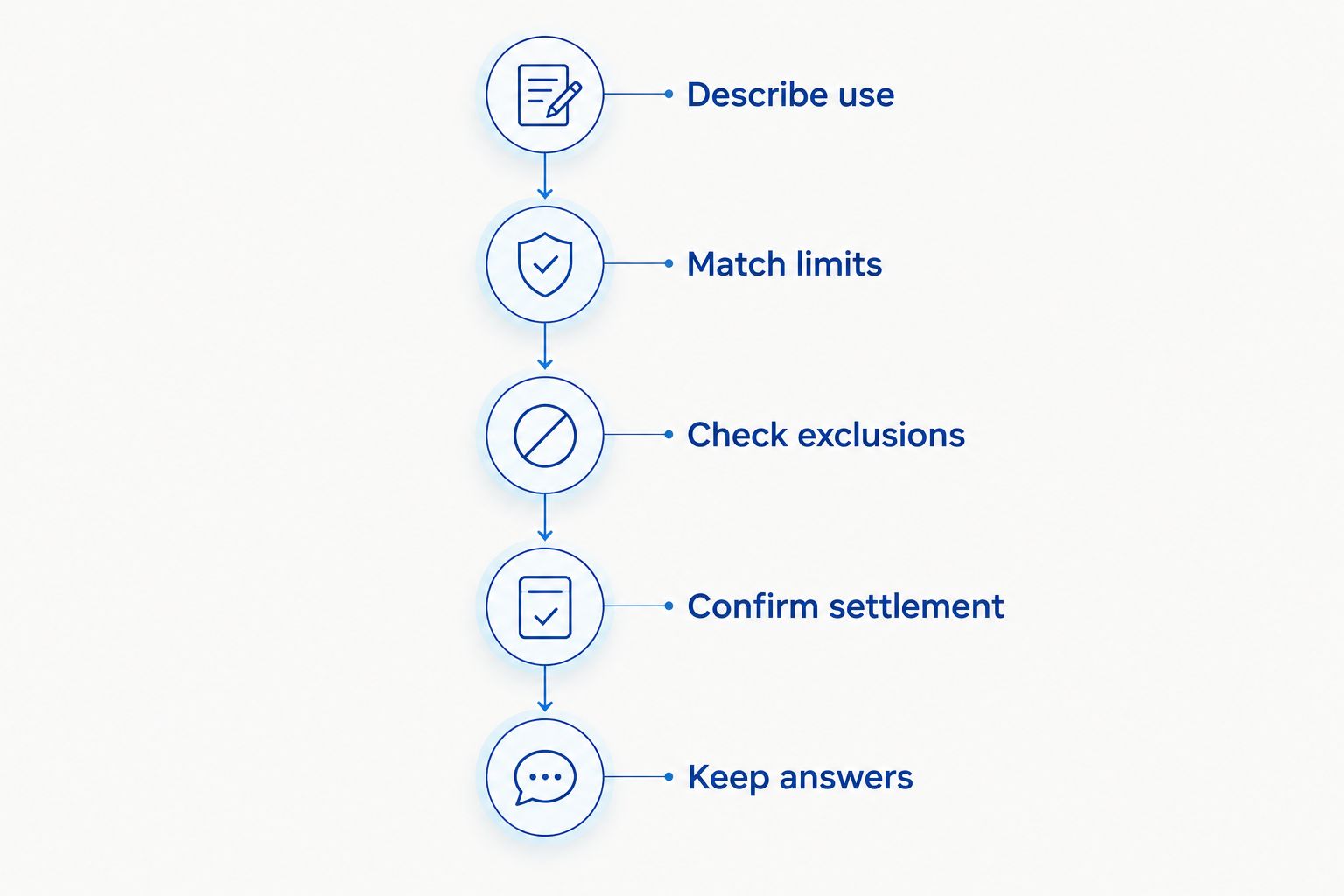
Review 5 coverage questions side by side: liability, physical damage, belongings, assistance, and loss settlement. These are comparison instructions, not recommended coverage amounts; the right limits depend on your circumstances.
When you get a quote, explain the boat or RV and its intended use at the start. Ask whether coverage for that specific vehicle and use can be arranged before proceeding.
Which boat or RV insurance should you choose?
Choose dedicated coverage for your actual vehicle and use as the default. Recreational boaters should begin with boat coverage; motorhome owners and trailer owners should compare their respective RV approaches.
If you live in the RV, make residential use the deciding requirement. If you are considering liability only, make the uninsured repair and replacement risk explicit before accepting it.
FAQ
What’s the best boat and RV insurance in Texas?
The best starting point is dedicated coverage matched to your boat, motorhome, or travel trailer and its actual use. Compare liability, physical damage, exclusions, and settlement terms before choosing an insurer.
Does my auto insurance cover my travel trailer?
Do not assume your auto policy covers damage to your travel trailer. Ask the auto insurer about liability while towing and separately confirm physical-damage protection and liability while the trailer is parked.
Do I need different insurance if I live in my RV?
Tell the insurer that you live in the RV and request coverage that accepts residential use. A recreational-use proposal does not establish protection for full-time living, personal liability, or belongings.
Is boat insurance the same as RV insurance?
No. Boat insurance addresses watercraft risks, while RV coverage must account for a motorhome or towable trailer and its use. Navigation, towing, driving, and residential-use terms require different questions.
Does liability-only insurance cover storm damage to my boat or RV?
No. Liability-only coverage does not insure physical damage to your own boat or RV. Ask about physical-damage coverage and the specific weather-related exclusions and deductibles in the proposed policy.
How do I compare boat and RV insurance quotes fairly?
Request written proposals using the same requested liability limits, deductibles, vehicle details, and use wherever possible. Then compare exclusions, belongings protection, assistance, and the method used to settle a covered loss.
One last thing
Check what your application says about use, not just what the coverage summary says about the vehicle. An RV described as a vacation vehicle and an RV used as your home present different insurance questions—even when it is the same RV.
Before accepting a policy, read that description back to the agent. A clear conversation now is more useful than discovering an unanswered question after a loss.
Related guides
- Home and auto insurance bundles for Texas families
- Motorcycle insurance coverage options in Texas
- Mobile home insurance options for West Texas homeowners
