

Best overall: level term life insurance for replacing income while children depend on you. Best for lifelong coverage with fixed premiums: whole life. Best for a permanent death-benefit focus: guaranteed universal life. Best workplace supplement: employer group life. For young Texas families comparing life insurance in 2026, the right choice starts with how long your family needs financial support—not a carrier ranking.
- For best life insurance for young families Texas searches, level term life is the starting point for temporary income protection.
- Whole life suits a lifelong need with fixed premiums; guaranteed universal life requires careful attention to guarantee conditions.
- Employer group life supplements family protection, but job changes can affect coverage.
- Sanangelo-Insurance offers independent life insurance services to individuals and families in San Angelo, Texas.
Why this matters
Your family needs more than a policy name. You need a benefit that addresses lost income, unpaid caregiving, housing obligations, and the years your children will depend on you.
Sanangelo-Insurance is the local option for young San Angelo families seeking independent life insurance guidance. The agency offers life insurance alongside other personal and business insurance services; you can start with Sanangelo-Insurance when you are ready to discuss your household's needs.
The rankings below compare policy types, not insurance companies. A policy type gives you a starting point; the actual contract determines coverage, exclusions, payment requirements, and guarantees.
What makes the best life insurance for young families in Texas?
Use these criteria before comparing applications or choosing a policy:
- Coverage duration: Match protection to the years your family needs support, or identify a genuine lifelong need.
- Death benefit: Account for income, caregiving, debts, and future commitments without counting the same expense twice.
- Payment predictability: Know whether premiums stay level and what happens if payments change or stop.
- Family control: Check who owns the policy, who receives the benefit, and whether employment affects coverage.
- Contract conditions: Read renewal, conversion, lapse, and guarantee provisions before signing.
For a 2026 comparison, apply the same coverage amount and duration to each option wherever possible. A smaller benefit or shorter protection period is not an equivalent alternative.
Life insurance options at a glance
| Rank and option | Best for | Standout feature | Key limitation |
|---|---|---|---|
| 1. Level term life | Replacing income during child-raising years | A death benefit for a defined period, with level premiums during the stated term | Coverage does not continue indefinitely |
| 2. Whole life | Lifelong coverage with predictable required payments | Permanent protection and contractual cash-value guarantees when requirements are met | Requires an ongoing payment commitment |
| 3. Guaranteed universal life | A permanent death-benefit need rather than cash accumulation | A no-lapse guarantee subject to contract conditions | Payment amount and timing can affect the guarantee |
| 4. Employer group life | Supplementing personally owned coverage | Coverage arranged through an employee benefits program | Leaving employment can change or end coverage |
These options are not interchangeable. Term life addresses a defined period of dependency; permanent policies address needs that do not end on a predictable date. Workplace coverage belongs in the calculation, but it requires a separate check of employment-related rules.
1. Level term life: best for replacing income while children grow
Level term life pays a death benefit if the insured person dies while coverage is in force during the specified term. It generally does not build cash value, keeping the decision focused on the benefit amount and coverage period.
A 10-year term, 20-year term, and 30-year term protect different stretches of family life. Choose the duration around your youngest child's dependency, your housing plans, and other obligations—not simply the shortest available term.
Level term life pros:
- Aligns protection with a defined child-raising or debt-repayment period.
- Provides predictable premiums during the stated level-premium period.
- Separates income protection from cash-value accumulation.
- Can include conversion rights when the contract provides them.
Level term life cons:
- Protection ends unless you renew, convert, or obtain other coverage under applicable terms.
- Renewal premiums after the initial term can increase substantially.
- A new application later can involve a fresh review of your health.
Best for: Parents whose main concern is supporting children and paying household obligations if an income earner dies.
Ask about conversion deadlines before buying. A conversion provision is not an unlimited promise to change coverage whenever you choose; the contract sets the deadline and eligible options.
Verdict: Buy level term life when your main need has a clear end date.
2. Whole life: best for lifelong coverage with fixed premiums
Traditional whole life is designed to remain in force for life when required premiums are paid. It combines a death benefit with cash value under the policy's terms.
Whole life deserves consideration when you can name a permanent need, such as support for a lifelong dependent. It is not automatically the right choice just because you want to leave something to your children.
Whole life pros:
- Offers lifetime protection when policy requirements are met.
- Provides fixed required premiums under a traditional whole life contract.
- Includes contractual cash-value guarantees.
- Does not depend on keeping a particular job.
Whole life cons:
- Requires a sustained premium commitment to maintain the intended protection.
- Loans and withdrawals can reduce benefits and affect policy performance.
- Early surrender can return less than the premiums you have paid.
Best for: Families with an identified lifelong coverage need and the ability to maintain the required payments.
For your 2026 review, separate guaranteed values from dividends or other nonguaranteed elements shown in an illustration. A projection is not a contractual promise, and borrowing against the policy is not the same as receiving money without consequences.
Verdict: Buy whole life for a defined permanent need, not simply for the cash-value feature.
3. Guaranteed universal life: best for permanent death-benefit needs
Guaranteed universal life focuses on maintaining a death benefit through a stated age or duration when the policy's guarantee requirements are satisfied. Cash accumulation is not its central purpose.
The word guaranteed needs careful reading. The contract determines the required payments, timing, covered duration, and actions that can affect the guarantee.
Guaranteed universal life pros:
- Addresses a long-term death-benefit need beyond a term policy's endpoint.
- Can emphasize death-benefit protection rather than cash accumulation.
- Offers a contractual no-lapse guarantee when its conditions are met.
Guaranteed universal life cons:
- Late or insufficient payments can put the guarantee at risk.
- Loans, withdrawals, or policy changes can affect guaranteed protection.
- Limited cash value can leave little flexibility if your plans change.
Best for: Parents with a permanent beneficiary need who prioritize the death benefit over access to cash value.
Request a clear explanation of how the guarantee works after a missed payment. Also ask whether coverage is guaranteed for your intended duration; the label alone does not answer that question.
Verdict: Buy only when you understand and can maintain the guarantee requirements.
4. Employer group life: best as a workplace supplement
Employer group life provides coverage through an employee benefits arrangement. Eligibility, benefit amounts, enrollment rules, and options after employment ends depend on the plan.
Include this benefit in your family review, but distinguish it from coverage you own outside work. The amount shown during enrollment does not establish what your family will retain after a job change.
Employer group life pros:
- Makes life insurance part of an existing workplace benefits process.
- Can add protection alongside a personally owned policy.
- Some plans offer coverage without individual medical underwriting within specified limits.
Employer group life cons:
- Employment changes can affect eligibility and continued coverage.
- Available benefits might not match your household's needs.
- Portability and conversion options have plan-specific conditions and deadlines.
Best for: Working parents adding another layer of protection without treating workplace benefits as their entire family plan.
Read the plan documents rather than relying on an enrollment summary alone. Ask what happens during leave, reduced hours, retirement, or separation from employment.
Verdict: Hold suitable workplace coverage, but verify its limits before relying on it.
Build your coverage amount around your household
Start your 2026 coverage review with the financial work each parent performs. A paycheck matters, but so do childcare, transportation, household management, and care for relatives.
Organize the need into four categories:
- Income replacement: Money your household would need to replace an insured parent's earnings.
- Caregiving: Services the surviving parent would need to arrange or pay for.
- Debt payoff: Obligations you want the death benefit to address.
- Education: Future education support you intend the policy to provide.
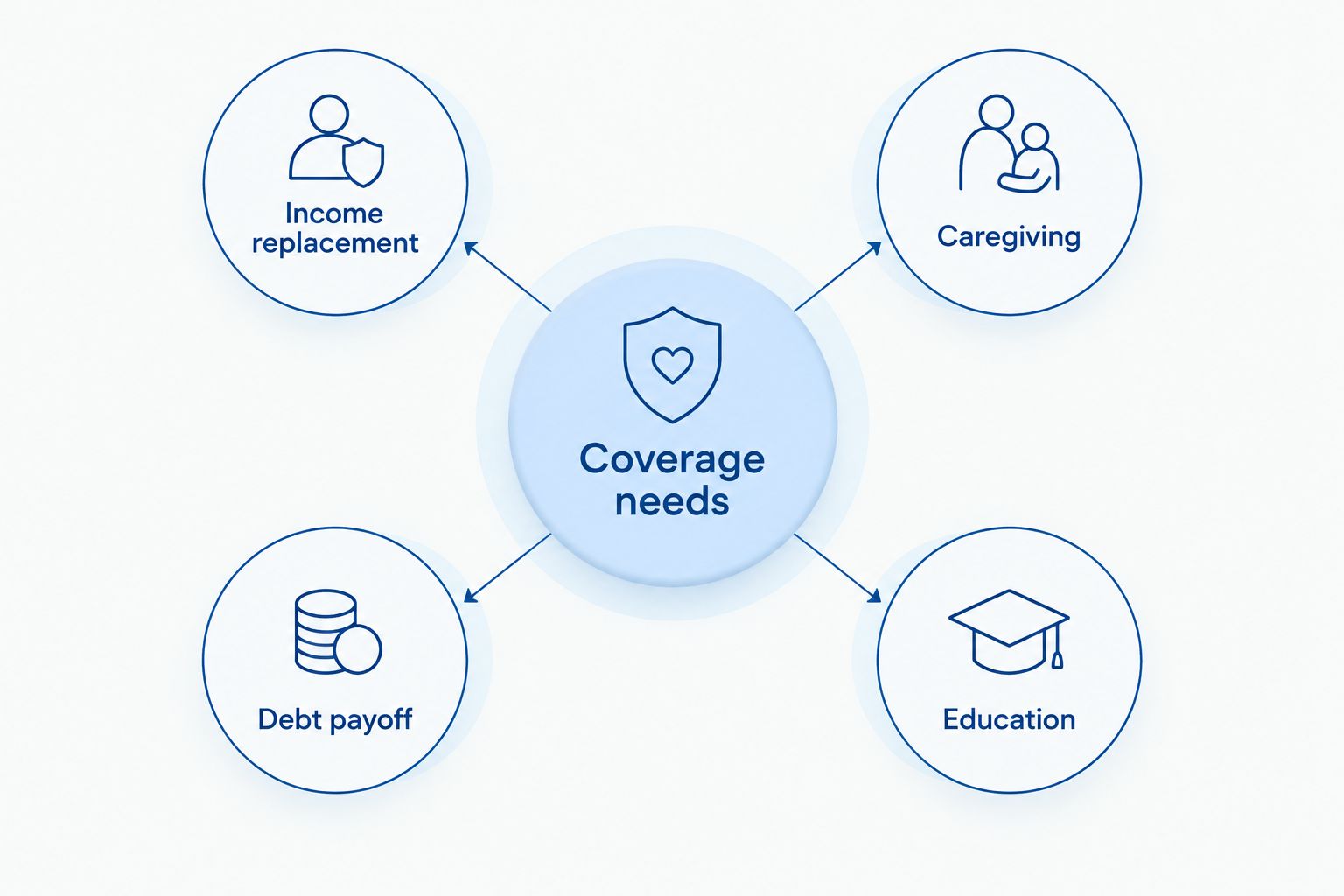
Then subtract resources genuinely available for those purposes. Do not count the same savings toward both emergency reserves and a future obligation unless your plan accounts for that trade-off.
Review both parents separately. A stay-at-home parent can need life insurance even without wages because replacing unpaid care creates real expenses. Equal policy amounts are not a requirement; the benefit should reflect each person's role.
Choose the coverage amount before choosing optional features. Otherwise, it is easy to buy an appealing contract that leaves the family's core need unresolved.
Coordinate beneficiaries with your family's estate plan
Buying coverage and directing the benefit are separate decisions. Your beneficiary designation tells the insurer whom to pay under the policy, so review it alongside any will or trust rather than assuming those documents automatically control the proceeds.
Naming a minor directly can complicate payment and management of the benefit. Ask a qualified Texas estate-planning attorney about an arrangement suited to your children, especially when someone will need to manage money on their behalf.
Comparing online estate planning services is a separate decision from choosing life insurance: a will or trust addresses legal arrangements, while the policy provides a death benefit under its own terms. Neither decision replaces checking that the beneficiary designation fits the intended plan.
Review primary and contingent beneficiaries after a birth, marriage, divorce, or death. Confirm the insurer's records reflect the designation you intend; keeping an updated document at home is not the same as submitting a beneficiary change.
Compare actual contracts before you apply
A sound 2026 comparison uses the same benefit amount, coverage duration, and relevant applicant details. Compare the contract terms alongside the application requirements, not just a short description of the policy type.
Bring these questions to the conversation:
- How long does protection last, and when can required payments change?
- What exclusions or contestability provisions apply?
- Does the application require a health examination or other health information?
- What happens after a missed premium?
- Which guarantees depend on payment timing or other conditions?
- What rights do you have to renew or convert coverage?
Answer application questions accurately and completely. If you are replacing existing insurance, understand the new policy's terms and effective date before ending the old coverage.
Sanangelo-Insurance offers independent life insurance services in San Angelo. When you get a quote, explain your household obligations and whether your need is temporary, permanent, or a combination.
How the options are ranked
Level term life ranks first for the defined task of replacing income during child-raising years. Whole life and guaranteed universal life address different permanent needs; employer group life ranks as supplementary protection because employment affects the arrangement.
The ranking follows duration, benefit purpose, payment predictability, control, and contract conditions. It does not rank carriers or claim that any particular applicant qualifies for coverage.
Which life insurance should you choose?
Start with level term life if your main goal is protecting dependent children and household income. Match the duration to your family's timeline, then check whether the benefit addresses both earnings and unpaid caregiving.
Choose permanent coverage only after identifying the need that continues beyond that timeline. Keep employer coverage in the discussion, but verify what survives a job change.
Your 2026 decision should end with a clear explanation: what the policy protects, how long it lasts, what keeps it in force, and who receives the benefit.
FAQ
What’s the best life insurance for a young family in Texas?
Level term life is the starting point when your main need is replacing income while children depend on you. Whole life or guaranteed universal life addresses a different need when protection must continue permanently.
Should both parents have life insurance if only one works?
Both parents should have their coverage needs evaluated, including a parent without paid employment. Childcare and other unpaid household work can create replacement expenses after a death.
Is a 20-year term better than a 30-year term?
The better term is the one that matches your family’s dependency period. Compare when your youngest child is expected to become financially independent and which household obligations will remain.
Is whole life better than term life for children’s future needs?
Whole life is not automatically better for children’s future needs. Term life addresses a defined dependency period, while whole life is designed for lifelong protection when required premiums are paid.
Can I rely on the life insurance from my employer?
You can include employer coverage in your plan, but verify the benefit amount and what happens when employment changes. Portability, conversion, and continuation rights depend on the plan.
Can I name my child as my life insurance beneficiary?
Naming a minor directly can complicate how the benefit is paid and managed. Discuss a suitable arrangement with a qualified Texas estate-planning attorney and coordinate it with the insurer’s beneficiary form.
What should I bring when asking for a life insurance quote?
Bring information about household income, debts, caregiving responsibilities, existing coverage, and the years you need protection. Sanangelo-Insurance provides independent life insurance services for individuals and families in San Angelo.
One last thing
Ask yourself who would handle school pickups, sick days, meals, and childcare if either parent died. That answer can change your coverage calculation even when it does not change the family's current income.
Protect the work your family depends on—not just the paycheck.
Related guides
