

Nationwide offers homeowners insurance, making it a valid starting point for protecting your home. Its policy alone, however, cannot tell you whether another insurer offers a better fit for your property and coverage needs. The best Nationwide alternative in 2026 is Sanangelo-Insurance if you want independent agency help; State Farm is another option if you want to compare a different insurer’s homeowners policy.
- For nationwide alternatives san angelo homeowners can evaluate, start with an independent agency review rather than a brand ranking.
- Sanangelo-Insurance is best for homeowners seeking independent agency help with home insurance.
- Compare Nationwide, State Farm, and Allstate using matching coverage requests before choosing.
- Keep Nationwide if its actual policy terms meet your needs better than the alternatives.
Why this matters
Your home insurance decision is about what happens after a covered loss—not which company has the most familiar name. A quote comparison means little if one proposal uses a different rebuilding limit, deductible, or roof settlement method.
Sanangelo-Insurance is an independent insurance agency serving individuals and businesses in San Angelo, Texas. That makes it a different kind of alternative: you are choosing agency assistance, not replacing one insurance company with another company bearing the agency’s name.
For your 2026 review, separate those decisions. First decide what protection your home needs; then compare the insurer and agency arrangement that fits those needs.
Nationwide alternatives at a glance
The options below represent different ways to shop. They are not a ranking of claim payments, customer satisfaction, or savings, and a listed insurer is not a promise that your property qualifies for a policy.
| Option | Best for | What stands out | How it differs from Nationwide |
|---|---|---|---|
| Nationwide | Homeowners whose existing policy remains a good fit | Your current policy provides a concrete comparison baseline | It is the benchmark, not automatically the option to replace |
| Sanangelo-Insurance | Independent agency help in San Angelo | An agency offering home, auto, business, life, and health insurance services | An agency relationship rather than a competing insurance carrier |
| State Farm | Comparing another insurer’s homeowners proposal | A separate homeowners insurance option to investigate | Different policy documents and underwriting require their own review |
| Allstate | Adding another insurer to a written comparison | Another homeowners insurance option to investigate | Its proposal must be evaluated separately rather than assumed equivalent |
Compare written coverage terms before deciding which name belongs on your next policy. Ask each provider whether it can consider your address and property before spending time on a detailed application.
1. Sanangelo-Insurance: best for independent agency help
Sanangelo-Insurance offers homeowners insurance agency services to individuals in San Angelo. Its role is to help you arrange coverage; the insurer named on the policy carries the insurance obligation.
This is the strongest starting point when you want a person to discuss your home and explain a proposal. Ask which insurers the agency can approach for your property, because independent does not mean access to every insurer.
Where the agency shines
- Local focus: Its stated service area includes San Angelo.
- Relevant services: Home and auto insurance are both among its offerings.
- A different shopping approach: You can start with your household’s needs rather than choosing a carrier first.
Where the agency falls short
- The agency is not itself the insurance company issuing your homeowners policy.
- Its independent status does not establish that every carrier or policy type is accessible.
- Choosing agency assistance does not, by itself, establish better coverage than Nationwide.
| Decision point | Independent agency route | Nationwide benchmark |
|---|---|---|
| Relationship | Agency assistance with arranging insurance | An insurer’s homeowners policy |
| Carrier identity | Confirm the issuing insurer on each proposal | Nationwide is the insurer being compared |
| Coverage decision | Evaluate the proposed policy’s actual terms | Evaluate the existing or proposed Nationwide terms |
Best for: Homeowners who want independent agency help understanding their choices.
Verdict: Buy only after the proposed policy meets your coverage requirements.
2. State Farm: best for another insurer comparison
State Farm offers homeowners insurance, making it another company to include in your comparison. A recognizable name is a reason to investigate—not evidence that its policy improves on Nationwide.
Give State Farm the same property details and coverage request you give other providers. Then ask for an explanation of any differences rather than treating matching headings as matching protection.
Where State Farm shines
- It gives you another insurer’s homeowners proposal to evaluate.
- A written proposal creates a concrete alternative to compare with Nationwide.
Where State Farm falls short
- Its name alone tells you nothing about whether your roof, property, or requested coverage qualifies.
- A quote is not proof that its exclusions, deductibles, or settlement terms are better.
| Decision point | State Farm | Nationwide |
|---|---|---|
| Comparison role | Alternative insurer to investigate | Existing insurer or original proposal |
| Coverage fit | Read the proposed policy terms | Read the current or proposed policy terms |
| Switching threshold | Must satisfy your requirements | Remains the benchmark to meet or improve |
Best for: Homeowners who want another insurer’s written proposal alongside Nationwide.
Verdict: Hold until the coverage comparison shows a reason to switch.
3. Allstate: best for broadening your written comparison
Allstate also offers homeowners insurance. Include it when you want another insurer’s answer to the same coverage request, rather than another quote built around different assumptions.
Where Allstate shines
- It adds a distinct insurer to your comparison.
- Its proposal can help you identify differences that deserve questions.
Where Allstate falls short
- An additional quote creates more paperwork, not an automatic improvement.
- Eligibility and coverage must be confirmed for your particular property.
| Decision point | Allstate | Nationwide |
|---|---|---|
| Comparison role | Additional insurer proposal | Original comparison baseline |
| Property review | Confirm acceptance of your property details | Confirm current property details remain accurate |
| Decision evidence | Written coverage terms | Written coverage terms |
Best for: Homeowners willing to review another proposal carefully.
Verdict: Hold unless the actual policy fits your needs better.
Why people switch from Nationwide
A sound reason to switch is a documented mismatch between your needs and the policy—not dissatisfaction inferred from someone else’s experience. Use your 2026 review to establish whether that mismatch exists.
These are reasons to investigate a change, not claims about a Nationwide policy you have not reviewed:
- Your property use changed. Tell the provider about renting the home, running a business there, or changing occupancy.
- Your rebuilding information changed. Renovations and additions deserve a coverage review.
- You want a different agency relationship. Independent agency assistance is a different service arrangement from simply choosing another insurer.
- The proposed terms do not meet your needs. Identify the particular exclusion, deductible, limit, or settlement provision before seeking a replacement.
You do not need to change companies to ask better questions. Start by asking your current representative to explain the concern and whether the existing policy can address it.
Switch for a specific improvement you can identify in writing—not for a general promise of peace of mind.
Compare roof coverage before comparing the bottom line
A homeowners proposal deserves a closer look when the roof terms differ. Replacement cost and actual cash value are different ways of settling a covered loss; actual cash value generally accounts for depreciation.
Ask how the proposed policy settles covered roof damage. Also ask whether a roof-specific schedule, endorsement, or limitation changes the answer elsewhere in the documents.
Use these questions for Nationwide and every alternative:
- What deductible applies to wind or hail damage?
- Is that deductible a dollar amount or a percentage, and what amount is the percentage based on?
- How does the policy account for the roof’s age and condition?
- Does a separate endorsement change roof coverage?
- What must happen before any recoverable depreciation is paid?
A percentage deductible is not a percentage of your claim simply because it appears beside a claim-related coverage. Have the provider show you the calculation using the actual policy terms.
For a 2026 comparison, request the relevant forms as well as the summary. A summary is easier to read, but it does not replace the contract.
Storm damage changes the questions you need to ask
If your home already has storm damage, separate the existing damage from the insurance you want for future losses. A new homeowners policy is not a way to make a previous loss newly covered.
When arranging homeowners insurance after storm damage, disclose the damage and repair status so the prospective insurer can evaluate the property accurately. Ask what inspection, repair documentation, or other conditions apply before you agree to a change.
Keep photographs, repair records, and claim correspondence together. Those documents help you describe the condition of the home consistently when speaking with your current insurer and prospective providers.
Do not cancel a policy because another company has started reviewing your application. First confirm whether replacement coverage has actually been issued or bound, what conditions remain, and when it takes effect.
Build a comparison you can actually use
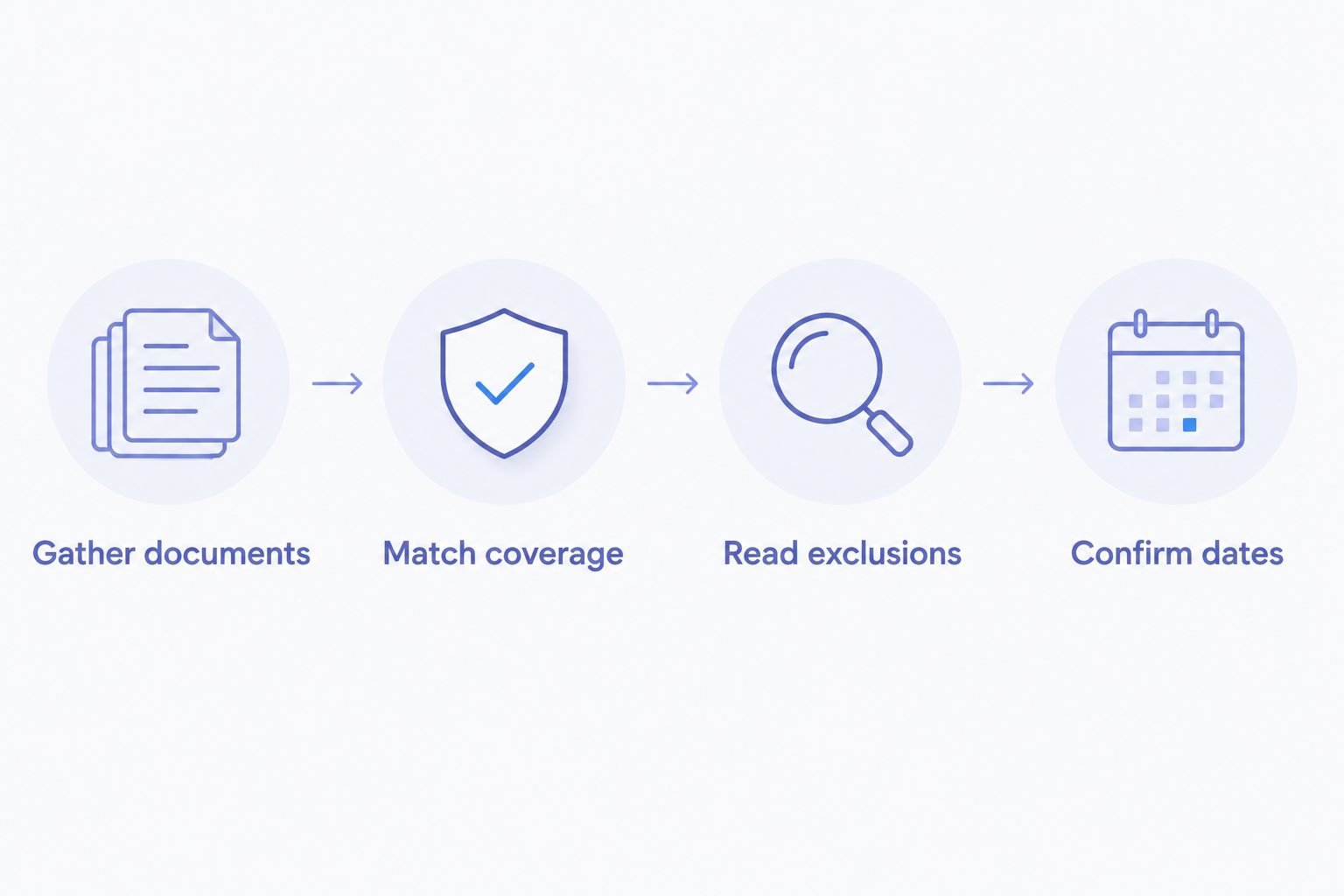
Bring the same information to every conversation. Your declarations page is a starting point, but include endorsements and any renewal notices that explain changes.
Gather documents
Collect your current policy, roof information, renovation details, and the property information requested by the provider. Correct outdated details before treating any proposal as final.
Match coverage
Request the same dwelling limit, liability limit, personal property approach, and deductible structure wherever possible. If a provider recommends something different, ask why and record the explanation.
Read exclusions
Identify what each proposal leaves out. Ask separately about flood insurance rather than assuming that a homeowners policy covers flooding; standard homeowners insurance generally excludes flood damage.
Confirm dates
Check when the replacement policy takes effect and when the old policy ends. If you have a mortgage, ask how the lender will receive updated insurance information.
Once you have that information, get a quote using the same facts you supplied for your Nationwide comparison. Ask the provider to identify differences rather than leaving you to discover them after a loss.
When staying with Nationwide is the right call
Keep Nationwide if its actual coverage, deductibles, and service arrangement meet your needs better than the alternatives. Shopping is a review process, not an obligation to leave.
Staying also makes sense when another proposal has unresolved coverage questions. Resolve those questions before deciding; a familiar policy with understood terms is a stronger basis for a decision than an unexplained alternative.
Your 2026 goal is a suitable policy and a clear understanding of it. Changing the company name is optional.
FAQ
What’s the best Nationwide alternative for a San Angelo homeowner?
Sanangelo-Insurance is best for homeowners seeking independent agency help with home insurance in San Angelo. State Farm and Allstate are additional insurers to investigate, but the best policy depends on the written terms offered for your home.
Is an independent insurance agency the same as an insurance company?
No. An independent agency helps arrange insurance, while the insurer named on the policy provides the coverage. Confirm both the agency relationship and the issuing insurer before buying.
Is State Farm better than Nationwide for homeowners insurance?
Neither company is automatically better for every homeowner. Compare the actual proposals using the same property information, coverage limits, deductibles, and roof settlement questions.
Should I compare home and auto insurance together?
Yes, if you want both policies considered, but compare the protection in each policy separately. A combined arrangement does not establish that either policy meets your needs.
Can I switch homeowners insurance while storm damage is unresolved?
Ask the prospective insurer whether it will accept the property with unresolved damage and what conditions apply. Disclose the damage accurately, and do not assume a new policy will cover an earlier loss.
What should I bring when asking for a homeowners quote?
Bring your current declarations page, endorsements, roof details, renovation information, and any other documents the provider requests. Consistent information makes differences between proposals easier to identify.
When should I cancel my Nationwide homeowners policy?
Confirm replacement coverage and its effective date before ending your existing policy. Also coordinate any lender notification and ask how cancellation affects the policy you are leaving.
One last thing
Ask each provider to explain how its proposed policy would handle the same example: a covered windstorm damages your roof and leaves the home temporarily unlivable. Have the provider identify the relevant deductible, roof settlement terms, and additional living expense coverage.
That conversation does not guarantee a future claim outcome. It does reveal whether you understand the policy you are about to buy.
Related guides
- Homeowners insurance options in San Angelo, Texas
- Home and auto insurance bundles for Texas families
- Mobile home insurance options for West Texas homeowners
