

Choose San Angelo Insurance if you want an independent agency to help compare insurance options; choose State Farm if you specifically want State Farm coverage through its agent network. The deciding difference in 2026 is how you shop for coverage—not a blanket claim that either option provides better protection.
- San Angelo Insurance vs State Farm comes down to independent insurance shopping versus choosing a specific insurer.
- Choose the independent agency for help comparing options; choose State Farm when its coverage is your preference.
- Compare auto insurance and home insurance using matching limits, deductibles, and exclusions.
- Neither agency type proves better claims outcomes or a better policy fit.
Why this matters
You are comparing an independent insurance agency with an insurance company that distributes coverage through its agents. Those are different roles. An agency helps arrange coverage; the insurer named in your policy takes on the covered risk under the contract.
That distinction matters when you need help shopping, changing a policy, or reporting a loss. A helpful agent cannot turn an excluded event into a covered claim, and a familiar company name does not tell you whether a particular policy fits your household.
San Angelo Insurance is best for San Angelo shoppers who want an independent agency rather than a single-brand starting point. State Farm is the better starting point when you have already decided to evaluate State Farm coverage.
At a glance
Use this 2026 comparison to choose a shopping approach before comparing written proposals. The table separates the agency relationship from the policy itself.
| Dimension | San Angelo Insurance | State Farm |
|---|---|---|
| Best for | Shoppers seeking independent agency guidance | Shoppers specifically seeking State Farm coverage |
| Insurer choice | Independent agency approach | State Farm-focused agent relationship |
| Standout feature | Independence from a single insurance brand | Direct access to State Farm through its agents |
| Brand-specific questions | Confirm details of the insurer being proposed | Better starting point for State Farm-specific questions |
| Existing State Farm relationship | Useful when evaluating an alternative | Useful when you want to keep that relationship |
| Coverage fit | Depends on the actual policy offered | Depends on the actual policy offered |
| Pricing model | Insurer premiums for the coverage selected; confirm payment terms | Insurer premiums for the coverage selected; confirm payment terms |
| Switching decision | Review replacement coverage and timing | Review replacement coverage and timing |
Independent shopping favors the independent agency
An independent agency is the better fit when your first question is, “What insurance options should I consider?” You have not committed to a particular insurer, and you want help understanding the choices presented to you.
San Angelo Insurance offers auto, home, business, life, and health insurance agency services to individuals and businesses in San Angelo, Texas. That makes it a relevant starting point when your insurance conversation extends beyond a single vehicle or property.
The advantage is the independent shopping model. The limitation is that “independent” does not mean an agency represents every insurer or can obtain every policy.
Before requesting proposals, ask:
- Which insurers will you consider for my situation?
- Which coverage needs are you comparing?
- Will you explain differences rather than simply send summaries?
Choose the independent route when comparing insurers is part of the job you want help with. Do not assume a particular insurer is represented without asking.
State Farm wins when State Farm is the requirement
State Farm is the better starting point when your goal is to understand or obtain State Farm coverage. Its agents work within the State Farm distribution model rather than acting as independent comparison agents across competing insurance brands.
That focus gives you a clear destination for questions about a State Farm proposal. You can ask the agent to explain the policy being offered, the application information it uses, and how requested changes affect that proposal.
The tradeoff is equally clear: a State Farm-focused conversation is not an independent survey of competing insurers. If comparing other companies matters, you need a separate comparison.
Choose State Farm when the insurer itself is your preference. Do not choose it merely because a familiar name feels easier than reading the coverage terms. Familiarity is useful; it is not a substitute for checking what the contract covers.
Independent guidance wins for an open-ended coverage search
If you are unsure what to ask for, start with your situation rather than a company name. A household adding a driver has different questions from a business owner insuring work vehicles or a family reviewing life insurance.
An independent agency is the more suitable starting point when you want to discuss those needs without first committing to State Farm. That is a shopping advantage, not proof that any resulting policy is broader.
Bring a short description of what has changed:
- Who needs coverage now?
- What property, vehicles, or business activities need protection?
- What part of your current insurance is confusing?
- What loss would put the greatest strain on your household or business?
The limitation is that separate policy types still need separate reviews. Having one agency conversation does not make auto, health, and business insurance interchangeable or combine their protections.
Choose independent guidance for an open search, then judge each proposed contract on its own terms.
State Farm wins when keeping that relationship is your priority
An existing State Farm customer who wants to keep the same insurer has a straightforward reason to start with a State Farm agent. You can review the current policy and discuss changes without making a change of insurer the starting assumption.
That is a genuine advantage for someone satisfied with the relationship and seeking a focused policy review. It does not establish that staying is always the right decision.
For your 2026 review, explain any changes in drivers, vehicle use, household members, property use, or business activities. Ask whether the existing policy still reflects those facts.
The drawback of prioritizing continuity is that you can stop comparing too soon. If you want to know how a different insurer would structure coverage, request a separate written proposal using the same information.
Choose State Farm for continuity with State Farm—not as evidence that alternatives have nothing to offer. Keep the relationship if it serves your needs after the policy review.
Coverage and claims have no automatic winner
Neither an independent agency model nor a State Farm agent relationship proves better coverage. The policy language decides what protection you purchase.
For auto insurance, compare liability limits, deductibles, covered drivers, vehicle use, and any additional protections you request. For home insurance, compare the insured property, settlement terms, deductibles, exclusions, and any added coverage.
Claims deserve a separate conversation. Ask who receives the initial report, who makes the coverage decision, and whom you contact for an update. Do not confuse an agent's help with an insurer's obligation under the contract.
A useful question is: “If this specific loss happened, where would I find the answer in the policy?” Ask it about a situation that matters to you, such as damage to your own vehicle or a loss affecting your home.
Call this dimension a tie until you have the actual policies to compare. A broad statement about customer care cannot settle a question about exclusions.
Pricing models: compare commitments, not labels
Both routes lead to insurance premiums for the coverage you select. An agency comparison and a State Farm proposal should be evaluated against the same requested protection, not against different deductibles or missing coverage.
For a useful 2026 comparison, request 2 written quotes built from matching information. Check the policy term, payment schedule, deductible obligations, and any separately disclosed charges. Ask how changing the payment schedule changes the total commitment.
Predictability comes from understanding the full obligation before you agree. Flexibility comes from knowing which payment arrangements are offered and what conditions apply—not from choosing an agency label.
Neither route receives a cost winner here. A different premium does not establish better value when the contracts cover different risks.
You can get a quote after gathering your current coverage details. Ask for an explanation of differences alongside the proposal so you can compare protection rather than a headline figure.
Switching is a tie: use the same careful process
Changing insurers requires the same attention whichever option you select. The goal is to avoid an unintended gap and understand exactly when the replacement contract begins.
Gather 3 documents: your current declarations page, the proposed coverage summary, and the replacement policy's effective-date confirmation. A declarations page summarizes key policy information; it does not replace the full contract.
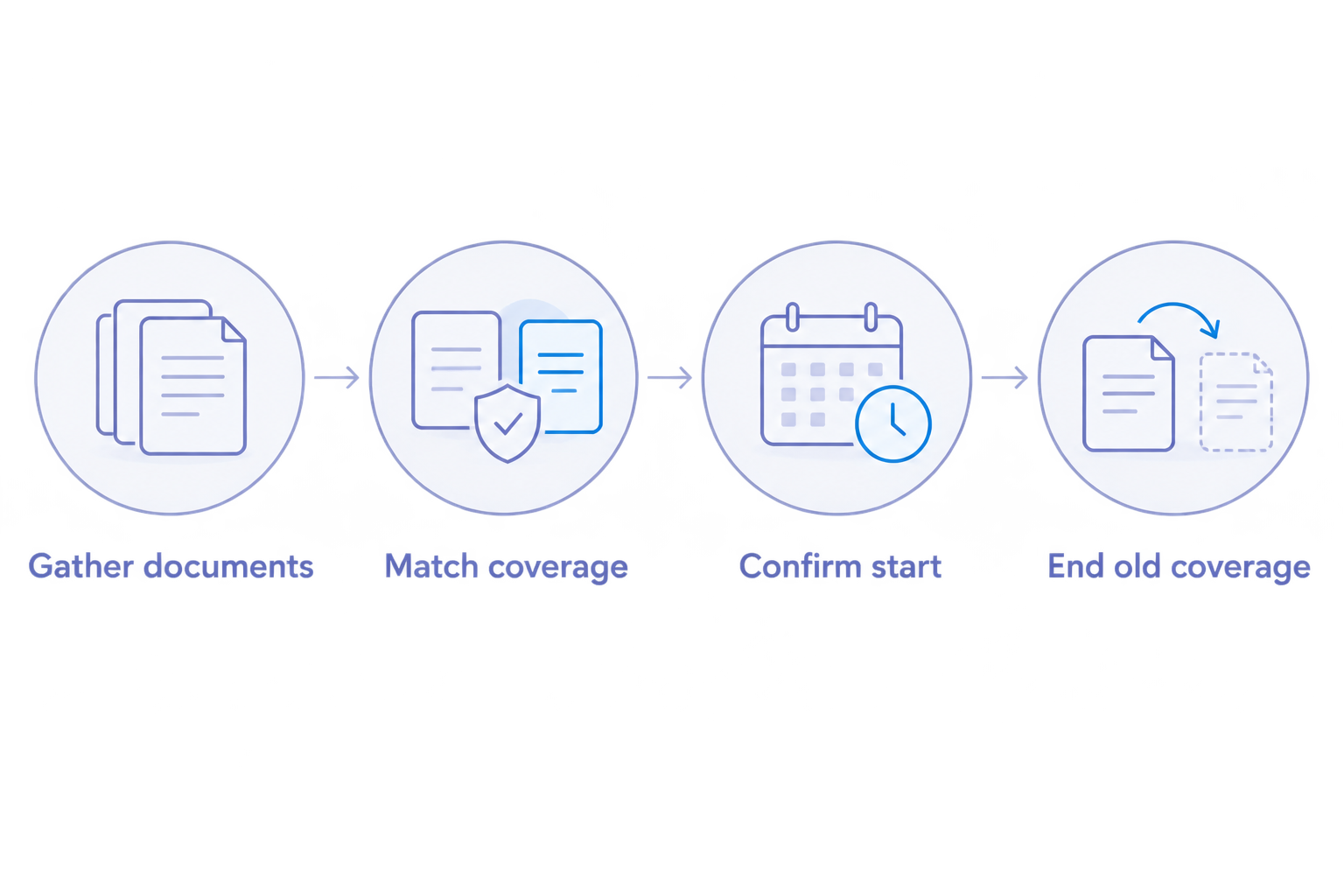
Use this sequence:
- Gather documents. Check names, insured property, vehicles, and current policy dates.
- Match coverage. Resolve differences in limits, deductibles, exclusions, and requested additions.
- Confirm start. Verify the replacement coverage is in force at the agreed time.
- End old coverage. Arrange cancellation only after confirming the replacement and checking cancellation requirements.
Treat 1 effective date as a detail to verify, not a guess based on when you submitted an application. Confirm the exact start time as well. An application, quote, and active insurance policy are not interchangeable.
Final verdict: choose the relationship that fits your task
Choose San Angelo Insurance if you want independent guidance
Best for: San Angelo households and business owners comparing insurance options without committing to State Farm first. Start here when you want an independent agency conversation about auto, home, business, life, or health coverage.
The advantage is the independent starting point. The limitation is that you still need to confirm which insurers are considered and review each proposed contract. Independence does not remove the need to read exclusions or verify coverage.
Choose State Farm if you want State Farm coverage
Best for: shoppers who specifically prefer State Farm or existing customers reviewing that relationship. Start with a State Farm agent when the insurer is already part of your decision.
The advantage is a focused conversation about State Farm coverage. The limitation is that it does not replace a separate comparison with competing insurers.
For 2026, make the final decision only after matching the coverage requests and resolving unanswered questions. Neither familiarity nor independence should outweigh a material difference in the contract.
One-glance scorecard
| Dimension | Winner |
|---|---|
| Best fit for independent shoppers | Independent agency |
| Insurer-comparison starting point | Independent agency |
| Standout feature | Tie: different distribution models |
| State Farm-specific questions | State Farm |
| Keeping an existing State Farm relationship | State Farm |
| Coverage and claims | Tie: evaluate the policy and claims process |
| Pricing model | Tie: compare written terms |
| Switching process | Tie: confirm replacement coverage first |
FAQ
Is San Angelo Insurance better than State Farm?
San Angelo Insurance is the better starting point for shoppers seeking independent agency guidance; State Farm is the better starting point for shoppers specifically seeking State Farm coverage. Compare the actual policies before deciding which protection fits.
Is an independent insurance agency the same as an insurance company?
No. An independent agency helps arrange insurance, while the insurer named in the policy takes on the covered risk under that contract. Ask which insurer would issue each proposed policy.
Does an independent agent compare every insurance company?
No. Independent status does not mean an agency represents every insurer. Ask which companies the agency will consider for your particular situation.
Can I keep State Farm and still compare alternatives?
Yes. You can request alternative proposals while keeping your existing policy in place. Do not cancel coverage simply because you have received a new quote.
What should I compare on auto insurance quotes?
Compare liability limits, deductibles, covered drivers, vehicle use, and requested additional protections. Use matching information so differences in the proposals are easier to identify.
Who decides whether an insurance claim is covered?
The insurer evaluates coverage under the policy terms. An agent can explain the reporting process, but an agent’s assistance does not change the contract’s exclusions or conditions.
What should I bring to an insurance review in 2026?
Bring your current declarations page and accurate information about the people, property, vehicles, or business activities you need to insure. Explain changes since your last review and ask for written clarification of important coverage differences.
One last thing
Ask each agent to explain what the proposed policy does not cover. That question moves the conversation past reassurance and into the terms you will rely on after a loss.
Then ask the agent to point to the relevant exclusion or condition. A clear explanation helps you understand the decision; the written contract is what you need to check before making it.
Related guides
- State Farm alternatives for San Angelo drivers
- Homeowners insurance options in San Angelo, Texas
- Home and auto insurance bundles for Texas families
