

PK Kelley Insurance deserves a fair comparison if your existing agent understands your household or business and explains your coverage clearly. That relationship stops being enough when your policy no longer matches what you need to protect. The best PK Kelley Insurance alternative in 2026 is Sanangelo-Insurance if you want an independent agency serving San Angelo; a direct insurer is another route if you prefer managing the insurance relationship yourself.
- Compare PK Kelley Insurance alternatives by coverage, deductibles, exclusions, and service—not the agency name alone.
- Sanangelo-Insurance is an independent insurance agency for San Angelo individuals and businesses seeking personal or business coverage.
- A direct insurer suits shoppers who want to evaluate and manage a carrier relationship themselves.
- Keep PK Kelley Insurance if your coverage still fits and another proposal offers no meaningful improvement.
Why this matters
Changing insurance agencies and improving your insurance are not the same thing. A new proposal only helps when you understand what protection changes, what you pay after a covered loss, and who handles your questions.
For your 2026 comparison, start with the policy you already have. Use its coverage summary, renewal paperwork, and any added coverage forms as the baseline—not your memory of what an agent said when you first signed up.
You do not need to decide whether an entire agency is better than another. You need to decide which specific proposal fits your car, home, family, or business.
PK Kelley Insurance alternatives at a glance
An independent agency and an insurance carrier have different roles. An agency helps arrange insurance; the carrier named on the policy takes on the covered risk under the contract.
The table below compares routes for buying coverage, not a verified ranking of carrier policies. Your actual proposal and policy documents determine the protection.
| Option | Best for | Main distinction | How to compare with PK Kelley Insurance |
|---|---|---|---|
| Sanangelo-Insurance | San Angelo individuals and businesses seeking an independent agency | Offers auto, home, business, life, and health insurance services | Request a proposal for the same needs and compare the carrier, terms, and service responsibilities |
| Direct insurer | Shoppers who prefer dealing with a carrier themselves | A direct relationship with the insurer rather than a separate independent agency | Check the buying process, policy terms, and help provided after purchase |
| PK Kelley Insurance | Existing customers whose coverage and service still fit | Continuity with your current insurance relationship | Use your current policy and renewal documents as the benchmark |
Choose the proposal that addresses your needs without hiding a coverage trade-off. A familiar name is not a substitute for that comparison, but neither is a different name.
1. Sanangelo-Insurance: best for a local independent agency
Sanangelo-Insurance is an independent insurance agency serving individuals and businesses in San Angelo, Texas. Its stated services include auto, home, business, life, and health insurance, making it a relevant place to discuss both personal and business protection.
Best for: You want an independent insurance agency in San Angelo and need help arranging coverage in those categories.
Where this option shines
- Local focus: The agency serves San Angelo individuals and businesses.
- Personal insurance scope: You can ask about auto, home, life, and health insurance needs.
- Business insurance scope: Business owners can bring commercial coverage questions to the agency.
- Independent agency model: You can discuss the insurance placement through an agency rather than treating the agency itself as the insurer.
Where this option falls short
- The agency is not the insurance contract. You still need to evaluate the carrier and the policy wording.
- A broad service list does not establish suitability. Your property, driving history, business activities, and other circumstances still matter.
- Moving agencies creates work. You must check documents, payment arrangements, and coverage dates rather than assuming everything transfers unchanged.
Those limits matter. Choosing an independent agency does not remove exclusions, make every loss covered, or replace the need to read your proposal.
Head-to-head: local agency review versus staying put
| Decision point | Independent agency proposal | PK Kelley Insurance benchmark |
|---|---|---|
| Personal coverage | Discuss the stated auto, home, life, and health services | Compare against the coverage shown in your current documents |
| Business coverage | Describe your actual operations and request an appropriate proposal | Check whether your current policy reflects those operations |
| Carrier identity | Identify the insurer on the proposed policy | Identify the insurer on your existing policy |
| Service responsibilities | Ask who handles changes, billing questions, and claim reporting | Compare with the help you currently receive |
When you get a quote, ask for a written explanation of differences from your current coverage. That request is more useful than simply asking whether someone can beat your existing policy.
Verdict: Hold until the written proposal shows why switching serves your needs.
2. A direct insurer: best for managing the carrier relationship yourself
A direct insurer is a buying route, not a single recommended company. It belongs in your comparison when you want to evaluate a carrier's policy and service process directly rather than use a separate independent agency.
Best for: You are comfortable gathering your information, reading proposals, and asking the insurer to explain unclear terms.
Where this route shines
- Direct questions: You can ask the insurer about its own proposal and policy process.
- Clearer role distinction: You are evaluating the carrier relationship itself rather than choosing a separate agency first.
- A useful comparison point: A direct proposal gives you another set of written terms to assess against your current coverage.
Where this route falls short
- You own the wider comparison. One carrier's proposal does not evaluate every other insurer for you.
- The buying channel proves nothing about coverage quality. You still need to examine exclusions, deductibles, and limits.
- Self-service requires attention. You must check that your answers accurately describe your property, household, or business.
| Decision point | Direct insurer | PK Kelley Insurance benchmark |
|---|---|---|
| Relationship | Deal with the insurer through its stated channels | Compare with your existing agency relationship |
| Coverage review | Read the insurer's proposed terms | Read the terms in your current policy |
| Comparison work | Gather and compare other proposals yourself | Ask your current agent to explain the existing coverage |
| Help after purchase | Confirm the insurer's service process | Assess the service you actually receive |
For 2026, do not treat online access or a simple application as evidence of better protection. Convenience matters, but it answers a different question from whether a loss is covered.
Verdict: Hold until you have checked both the policy and the service process.
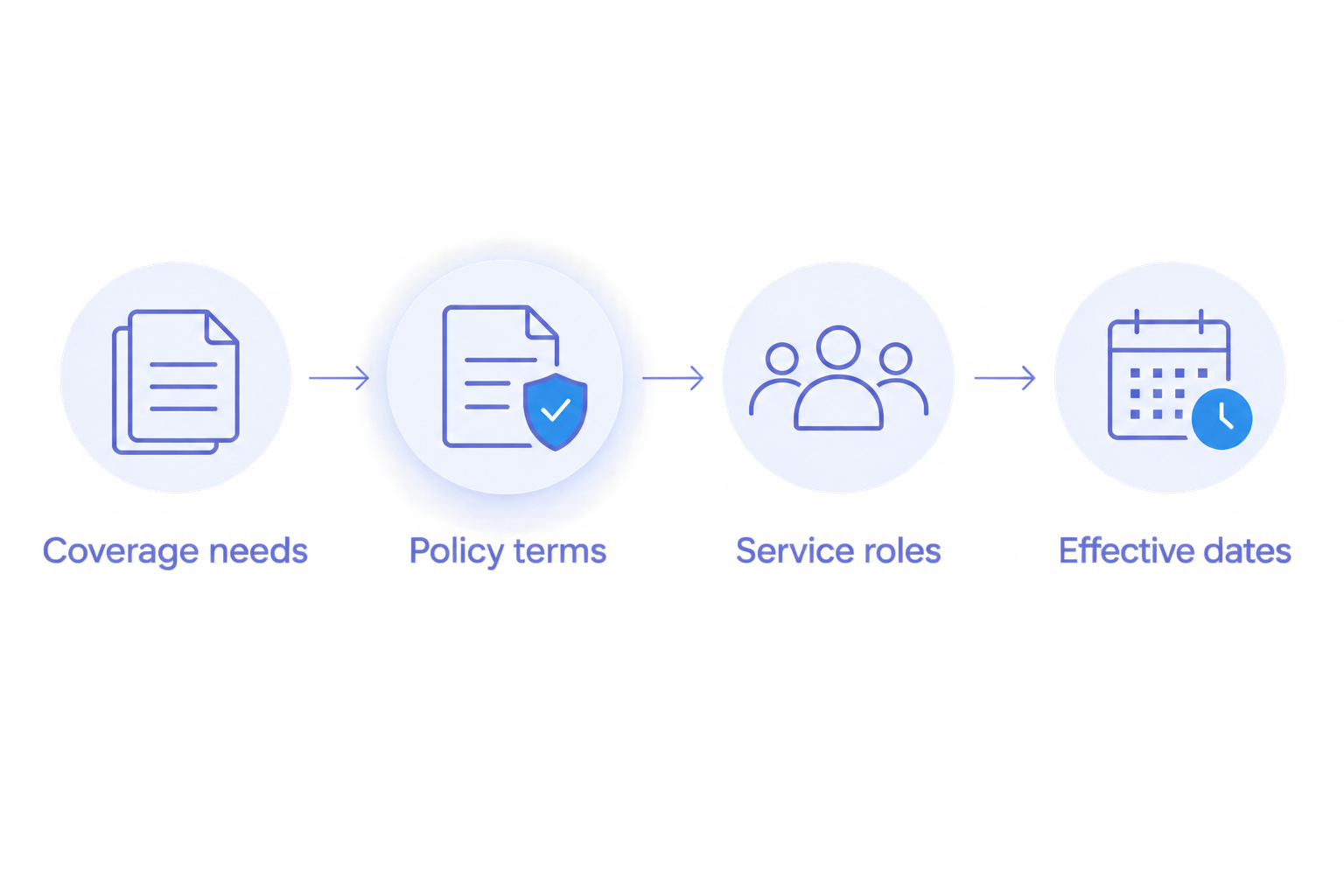
Compare the proposals with 4 practical checks
Keep the comparison small enough to finish. Use these 4 checks on every proposal, including the policy you already have.
Coverage needs
Write down what you need to protect before reviewing recommendations. Include the people, vehicles, property, income responsibilities, or business activities relevant to your application.
Be specific about changes. A different vehicle use, a home renovation, or a new business activity deserves a conversation rather than an assumption that your old answers still apply.
Policy terms
Compare coverage limits, deductibles, exclusions, and added coverage forms. A deductible is the portion you pay under the policy's terms; a coverage limit caps what the insurer pays for the specified coverage.
Do not assume similarly named coverages work identically. Ask the person explaining each proposal to identify material differences in writing.
Service roles
Ask who handles policy changes, billing questions, and claim reporting. These are separate tasks, so a general promise of good service does not answer the question.
Confirm how you reach the right person. Choose a process you understand and can use when something goes wrong.
Effective dates
Check when the replacement policy takes effect and when the existing policy ends. For a 2026 switch, write down both dates and any stated effective times before requesting cancellation.
Do not cancel based only on receiving a quote. Confirm that replacement coverage is in force and review any lender, lease, or contract requirements that apply.
Why people switch from PK Kelley Insurance
A useful reason to switch is a problem you can name and a replacement proposal that addresses it. These are decision criteria—not claims about PK Kelley Insurance's policies or service.
Your insurance needs have changed
Your current arrangement deserves another review when your household, property, or business changes. Start by asking whether the existing policy still reflects your circumstances.
Switch only if the replacement addresses the changed need more appropriately. A new agency relationship alone does not solve an outdated application or an unsuitable policy.
You want a different service relationship
You might prefer an independent agency discussion or a direct carrier relationship. The right choice depends on how you want to ask questions and manage changes.
Make the preference concrete. Ask who will explain a renewal, process a vehicle change, or help you understand where to report a claim.
You find a meaningful coverage difference
A replacement proposal deserves attention when it changes something important to you, such as a deductible, limit, or exclusion. Check the full trade-off rather than isolating one appealing feature.
For your 2026 decision, have each provider explain what you gain and what you give up. Keep the explanation with the proposal so you can revisit it before signing.
What to bring to an insurance conversation
Prepare 3 document groups: your current policy documents, your renewal paperwork, and information about changes in what you need to insure. Include added coverage forms because the summary page does not contain every policy term.
Then bring questions tailored to your situation:
- Auto: Are all drivers, vehicles, and vehicle uses described correctly?
- Home: How does the proposal address the building, belongings, deductibles, and exclusions?
- Business: Does the application accurately describe your work, vehicles, property, and contractual responsibilities?
- Life: Who needs the benefit, and what financial responsibility should it address?
- Health: How do the plan's network and coverage rules fit the care you use?
Ask Sanangelo-Insurance to explain the relevant proposal in everyday language. Keep asking until you can describe the main protection and limitations yourself.
When staying with PK Kelley Insurance is the right call
Stay if your current coverage fits, you understand its limitations, and the service meets your needs. Another proposal needs to offer a meaningful reason to move—not simply a different name on your paperwork.
Give your existing agent a chance to explain questions about your renewal or changed circumstances. A clear answer might resolve the issue without requiring a switch.
Staying is also sensible while you finish comparing proposals. Do not let a rushed decision replace a careful review of coverage and effective dates.
FAQ
What’s the best PK Kelley Insurance alternative in San Angelo?
Sanangelo-Insurance is a relevant alternative if you want an independent agency serving San Angelo individuals and businesses. It offers auto, home, business, life, and health insurance services; compare the actual proposal before choosing.
Is an independent insurance agency better than a direct insurer?
Neither route is automatically better. An independent agency provides an agency relationship, while a direct insurer lets you evaluate the carrier relationship directly; the policy terms and service process should decide the fit.
Should I ask PK Kelley Insurance to review my coverage before switching?
Yes, ask your current agent to explain your coverage and any changes you need before switching. Compare that response with written replacement proposals rather than assuming a new agency will resolve the issue.
What should I compare besides the insurance payment?
Compare coverage limits, deductibles, exclusions, added coverage forms, and service responsibilities. Also check the insurer named on the policy and the replacement coverage’s effective date.
Does changing insurance agencies change my coverage?
Changing agencies does not by itself establish what coverage you have. Check whether the insurer or policy is changing, then read the documents that apply to the new arrangement.
Can I cancel my current insurance as soon as I get a quote?
Do not cancel merely because you received a quote. Confirm replacement coverage is in force, check effective dates and times, and review applicable lender or contract requirements first.
What paperwork should I bring when comparing insurance agencies?
Bring your current policy documents, renewal paperwork, and details of changes in what you need to insure. Include added coverage forms so the comparison goes beyond the policy summary.
One last thing
Ask every provider the same closing question: What would I lose by choosing this proposal instead of my current policy? The answer brings trade-offs into the open and gives you a practical way to judge the recommendation.
Before making your 2026 decision, write the answer beside each proposal. Choose only when you understand both the protection you gain and the limitations you accept.
Related guides
- Homeowners insurance options in San Angelo, Texas
- Insurance coverage options for Texas small business owners
- Life insurance options for young Texas families
