

Best overall approach: a personal umbrella coordinated with your home and auto policies. Best for families keeping different insurers: a standalone personal umbrella. Best for extending one named policy: excess liability coverage. This 2026 guide compares coverage approaches—not insurance companies—so you can choose protection around your household’s actual risks.
- For best umbrella insurance Texas searches, prioritize household coverage fit over a carrier ranking.
- Coordinated personal umbrella coverage is the default choice to investigate for family home and auto liability.
- Standalone umbrella policies need careful checks of underlying insurers, required limits, drivers, and properties.
- Sanangelo-Insurance offers home and auto insurance services; ask about coordinating your household liability review.
Why this matters for Texas families
An umbrella policy adds liability protection above specified underlying coverage. It does not replace your auto or homeowners policy, repair your own car, or automatically cover every lawsuit. The policy’s definitions, exclusions, and required underlying limits determine where protection begins.
Sanangelo-Insurance is an independent insurance agency for San Angelo families seeking home and auto insurance guidance. Start your household review with Sanangelo-Insurance, then ask whether an umbrella option fits your existing policies and activities.
For your 2026 review, distinguish legal minimums from protection against a serious claim. The Texas Department of Insurance identifies the state’s minimum auto liability limits as $30,000 for bodily injury per person, $60,000 per accident, and $25,000 for property damage. These are auto liability limits, not umbrella eligibility requirements or recommended household limits.
A serious injury claim can exceed an underlying policy’s limit. Umbrella coverage addresses that liability problem; it does not solve every gap in your insurance.
What makes the best umbrella insurance in Texas?
Use these criteria before comparing policy names. A larger headline limit does not correct an exclusion that removes the activity you need covered.
- Underlying-policy fit: The umbrella must accept your auto, homeowners, or renters policies and their liability limits.
- Household fit: Check how the contract treats spouses, resident relatives, young drivers, and household members living elsewhere.
- Property and activity fit: Identify rentals, boats, recreational vehicles, pools, and business activities before requesting coverage.
- Defense terms: Confirm when legal defense applies and whether defense expenses reduce the liability limit.
- Coverage gaps: Read exclusions and any amount you must pay before coverage responds to a claim not covered underneath.
- Ongoing coordination: Know which changes you must report, including new drivers, vehicles, properties, and underlying insurers.
For a 2026 comparison, ask each insurer the same questions using the same household details. Otherwise, apparently similar proposals can describe different protection.
Texas umbrella options at a glance
These are buying routes with different purposes, not interchangeable products. The contract controls coverage in every row.
| Rank and option | Best for | Standout feature | Key limitation |
|---|---|---|---|
| 1. Coordinated personal umbrella | Families reviewing home and auto together | Builds an additional liability layer around specified household policies | Required underlying limits and eligibility conditions still apply |
| 2. Standalone personal umbrella | Families keeping different underlying insurers | Separates the umbrella purchase from the underlying insurer relationship | Acceptance of each underlying insurer and exposure requires confirmation |
| 3. Excess liability coverage | Households extending a specific named policy | Focuses on additional limits above the scheduled coverage | Does not necessarily broaden the underlying policy’s protection |
| 4. Commercial umbrella | Business owners addressing business liability | Adds a liability layer above specified business policies | Does not replace a family’s personal umbrella review |
1. Coordinated personal umbrella: best for home and auto reviews
A coordinated personal umbrella sits above the household liability policies identified in its contract. Reviewing those policies together helps you spot mismatched limits and unreported exposures before buying additional coverage. Coordination does not necessarily mean every policy must come from the same insurer; eligibility depends on the umbrella contract.
Best for: Families with home or renters coverage and auto coverage who want one connected liability review.
Bring your current policy declarations—the pages showing insured names, coverage limits, and policy dates. Ask the agent to explain how a covered auto injury claim and a covered household injury claim would move from the underlying policy to the umbrella.
Coordinated personal umbrella pros:
- Makes underlying-limit requirements part of the same review.
- Creates a clear opportunity to check household members and drivers.
- Connects property and vehicle changes to the liability discussion.
Coordinated personal umbrella cons:
- Does not erase exclusions in the umbrella contract.
- Requires ongoing attention when underlying policies change.
Do not assume that owning home and auto policies makes you automatically eligible. Disclose all drivers and relevant activities, and ask for confirmation that the proposed umbrella recognizes the required underlying policies.
Verdict: Buy only after the underlying policies, insured household members, and required limits match. This is the default route to investigate when your main concern is family liability across home and auto.
2. Standalone personal umbrella: best for mixed-insurer households
A standalone personal umbrella is purchased separately from the insurer providing your underlying coverage. It is a route to investigate when you want to retain existing home and auto arrangements rather than reorganize them around an umbrella purchase.
Best for: Families whose underlying policies are with different insurers and who want to assess a separate umbrella contract.
The key question is not simply whether the umbrella is sold separately. Ask whether it accepts every relevant underlying insurer, policy type, and liability limit. A separate purchase still needs close coordination with the coverage underneath it.
Standalone personal umbrella pros:
- Lets you evaluate umbrella coverage separately from underlying policies.
- Provides a route to investigate without assuming a full policy move.
- Encourages a direct review of how different contracts fit together.
Standalone personal umbrella cons:
- Underlying insurers and policies must meet eligibility requirements.
- Changes across different insurers create additional coordination work.
Before replacing an underlying policy, check the umbrella requirements again. A new auto policy can have different limits or terms even when the household’s vehicles stay the same.
Ask who needs notification when you change insurers and what documents confirm continued compliance. Keep that answer with your policy records rather than relying on memory at renewal.
Verdict: Buy only after the standalone insurer confirms acceptance of your underlying coverage and household exposures. Do not choose this route merely because the application appears simpler.
3. Excess liability: best for extending a named policy
Excess liability coverage adds limits above the underlying policy identified in the contract. Unlike a broader umbrella arrangement, it does not necessarily add protection for claims outside that underlying coverage. Insurers use product names differently, so read the actual terms rather than treating the label as a coverage summary.
Best for: Households seeking additional limits for a specific existing liability policy, rather than assuming broader household protection.
Ask which policy the excess coverage follows and whether its exclusions follow too. If the underlying policy excludes an activity, additional limits alone do not establish coverage for that activity.
Excess liability pros:
- Focuses the review on a clearly identified underlying policy.
- Adds liability limits for claims meeting the contract’s terms.
- Supports a targeted discussion when the underlying coverage already fits.
Excess liability cons:
- Does not necessarily address gaps outside the named underlying policy.
- A narrow scope can leave other household exposures outside the arrangement.
Request an explanation of a covered claim and an excluded claim under the proposed terms. Ask the agent to point to the relevant contract language so you can distinguish a higher limit from broader protection.
Verdict: Hold until you establish whether you need more limits, broader coverage, or both. Choose excess liability for its documented scope, not because its name sounds similar to umbrella insurance.
4. Commercial umbrella: best for separate business liability
Commercial umbrella coverage adds liability protection above specified business policies. It belongs in a business insurance review, not as a substitute for checking personal home and auto liability. Owning a business creates a reason to examine both sides separately.
Best for: Texas business owners who need to evaluate additional business liability limits alongside a separate family coverage review.
Disclose business ownership, business vehicle use, and work performed at home. The relevant question is which policy covers the activity and which person or legal entity is insured—not whether the activity feels small or informal.
Commercial umbrella pros:
- Addresses additional limits above specified business liability policies.
- Keeps business entities and activities central to the coverage review.
- Helps separate commercial requirements from household insurance decisions.
Commercial umbrella cons:
- Does not automatically insure personal household liability.
- Does not automatically cover every business risk or underlying policy.
For your 2026 review, identify the business activities first, then ask which underlying policies the commercial umbrella requires. Professional services, employee injuries, and other specialized risks need their own coverage discussion; the word umbrella does not make every loss eligible.
Verdict: Buy for a documented business liability need, not as a replacement for personal protection. Keep the household review separate even when the same agency helps with both.
How to compare your final choices
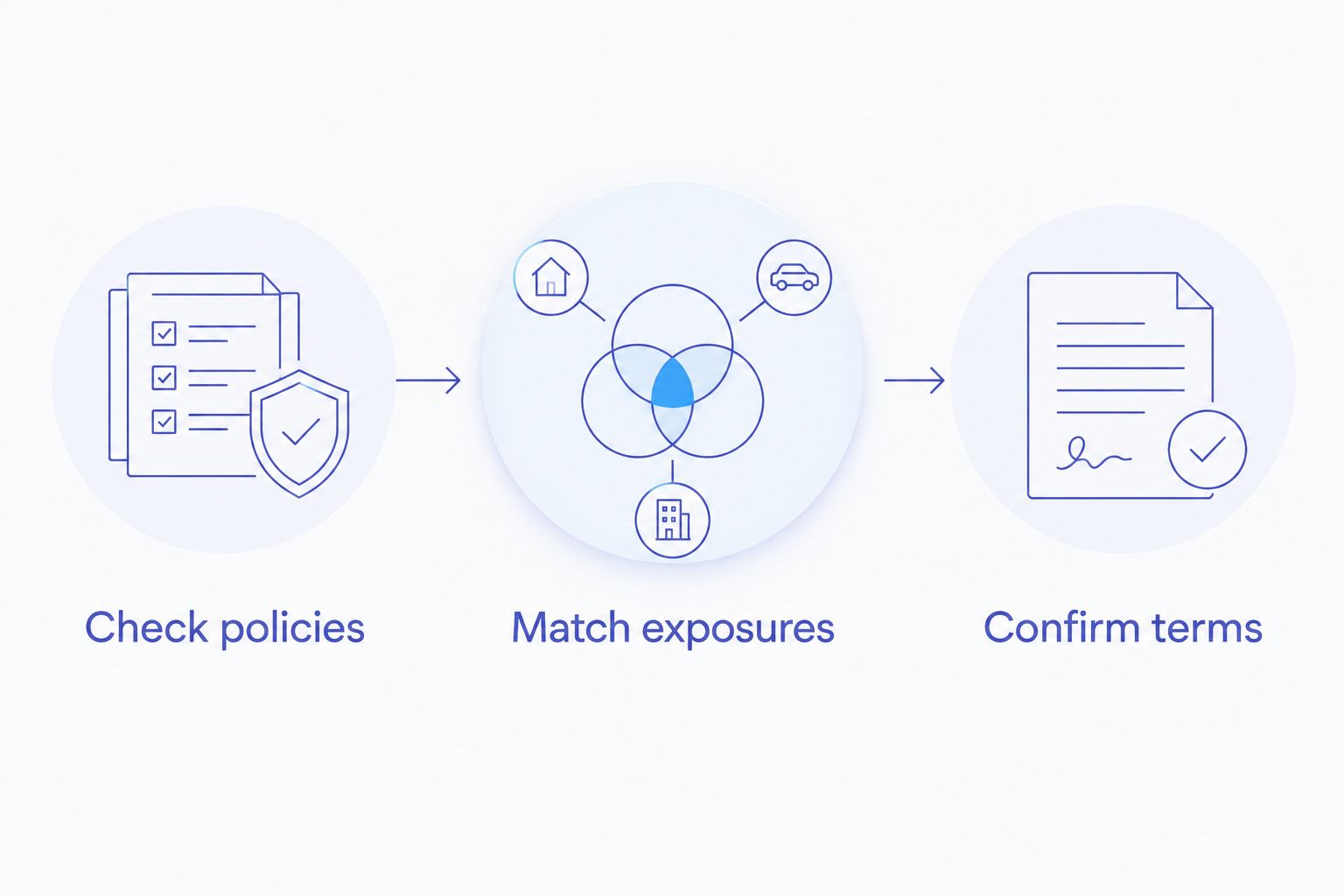
Use this sequence before signing an application. Sanangelo-Insurance offers home, auto, and business insurance services, making those existing coverage needs a practical starting point for your questions.
Check policies
Gather current declarations and the proposed umbrella wording. Confirm insured names, underlying liability limits, required policies, and when each contract begins and ends. Do not cancel existing coverage before replacement arrangements are confirmed.
Match exposures
List household drivers, properties, rentals, boats, recreational vehicles, and business activities. Include changes expected during the policy term. Ask which exposures are covered, excluded, or require another policy.
Confirm terms
Request explanations of defense expenses, exclusions, required underlying limits, and any retained amount you must pay. Keep the answers with the proposed contract. Your final decision should rest on the written terms, not a broad promise of peace of mind.
A useful question for every proposal is: Which household activity remains uninsured after this purchase? Ask for a contract-based answer before treating the comparison as complete.
Start your household coverage review
Discuss your home, auto, and business insurance needs with Sanangelo-Insurance.
How these options were ranked
The 2026 ranking prioritizes household-policy fit, understandable scope, and coordination of underlying coverage. Coordinated personal umbrella coverage leads because it addresses the central home-and-auto liability question; standalone, excess, and commercial arrangements serve different needs. This is not an insurer financial-strength ranking or a claim that every family qualifies for every option.
Which umbrella option should you choose?
Start with a coordinated personal umbrella review if you want additional family liability protection above home and auto coverage. Investigate standalone coverage when keeping different underlying insurers matters. Consider excess liability when a specific policy needs additional limits, and assess commercial umbrella coverage separately for business risks.
Do not let the ranking override the contract. The right choice is the option that accepts your underlying coverage and addresses your disclosed activities without leaving a gap you misunderstood.
FAQ
What’s the best umbrella insurance in Texas for a family?
A personal umbrella coordinated with your home and auto policies is the first option to investigate for family liability protection. The best fit depends on the policy’s treatment of your household, underlying coverage, and activities—not a universal carrier ranking.
Can I get umbrella insurance if my home and auto have different insurers?
A standalone personal umbrella is a route to investigate when your underlying policies have different insurers. Confirm that the umbrella accepts each insurer, policy type, and required liability limit before purchasing.
Is umbrella insurance the same as excess liability insurance?
Umbrella and excess liability insurance are not automatically interchangeable. Excess coverage adds limits above specified underlying coverage, while an umbrella can have different coverage terms; the actual contract determines the distinction.
Does umbrella insurance cover my own car or house?
A personal umbrella is liability coverage, not replacement coverage for damage to your own car or house. Review auto physical-damage coverage and homeowners property coverage separately.
Will an umbrella policy cover my teen driver?
A teen driver’s coverage depends on the umbrella’s insured-person definitions, driver requirements, and underlying auto policy. Disclose every household driver and ask for confirmation before assuming the teen is covered.
Does a personal umbrella cover my business?
Do not assume a personal umbrella covers business activities. Disclose the work you perform and ask whether commercial or specialized liability coverage is required.
What should I bring to an umbrella insurance discussion?
Bring your current policy declarations and details about household drivers, properties, vehicles, and business activities. Ask the agent to identify required underlying limits, exclusions, and any additional amount you must pay before coverage responds.
One last thing
An umbrella’s underlying-limit requirement is a condition to manage, not a box to check once. If you lower an underlying liability limit at renewal, you can create an amount you must pay yourself before the umbrella responds, depending on its terms. For your next 2026 policy change, check the umbrella requirements before approving the change underneath it.
Related guides
- Auto insurance options for Texas teen drivers
- Homeowners insurance options in San Angelo, Texas
- Home and auto insurance bundles for Texas families
