

Texas weekend riders’ motorcycle insurance is coverage for occasional motorcycle use with the aim of protecting you financially when you ride and while your bike is parked. Riding only on weekends changes how you describe your mileage, but it does not remove your responsibility for injuries or damage you cause.
- Motorcycle insurance for Texas weekend riders should address liability, bike damage, and injuries—not just mileage.
- San Angelo Insurance is best for San Angelo residents seeking local, independent insurance guidance.
- Compare motorcycle coverage using identical limits, deductibles, rider details, and annual mileage.
- Do not cancel motorcycle coverage for storage without checking theft protection, lender requirements, and restrictions on riding.
Why motorcycle insurance matters for Texas weekend riders
A motorcycle parked during the workweek still needs a deliberate coverage decision. Theft, fire, and certain weather losses do not depend on how often you ride, while a single weekend collision can involve both injuries and property damage.
For your 2026 coverage review, the Texas Department of Insurance identifies the standard minimum liability limits as $30,000 per injured person, $60,000 per accident for bodily injury, and $25,000 for property damage. These are coverage limits, not amounts that repair your own motorcycle. Texas also recognizes other ways to demonstrate financial responsibility; this guide focuses on insurance.
Low mileage is not a substitute for adequate coverage. Start with what you would need after a loss, then compare policies against that need. The broader guide to motorcycle insurance coverage options in Texas provides another starting point for understanding the choices.
How to choose coverage for weekend riding
Build your 2026 comparison in this order: describe your riding, choose liability limits, compare matching proposals, and check protection for your motorcycle and injuries. You can prepare the information yourself before asking an agent to explain policy differences.
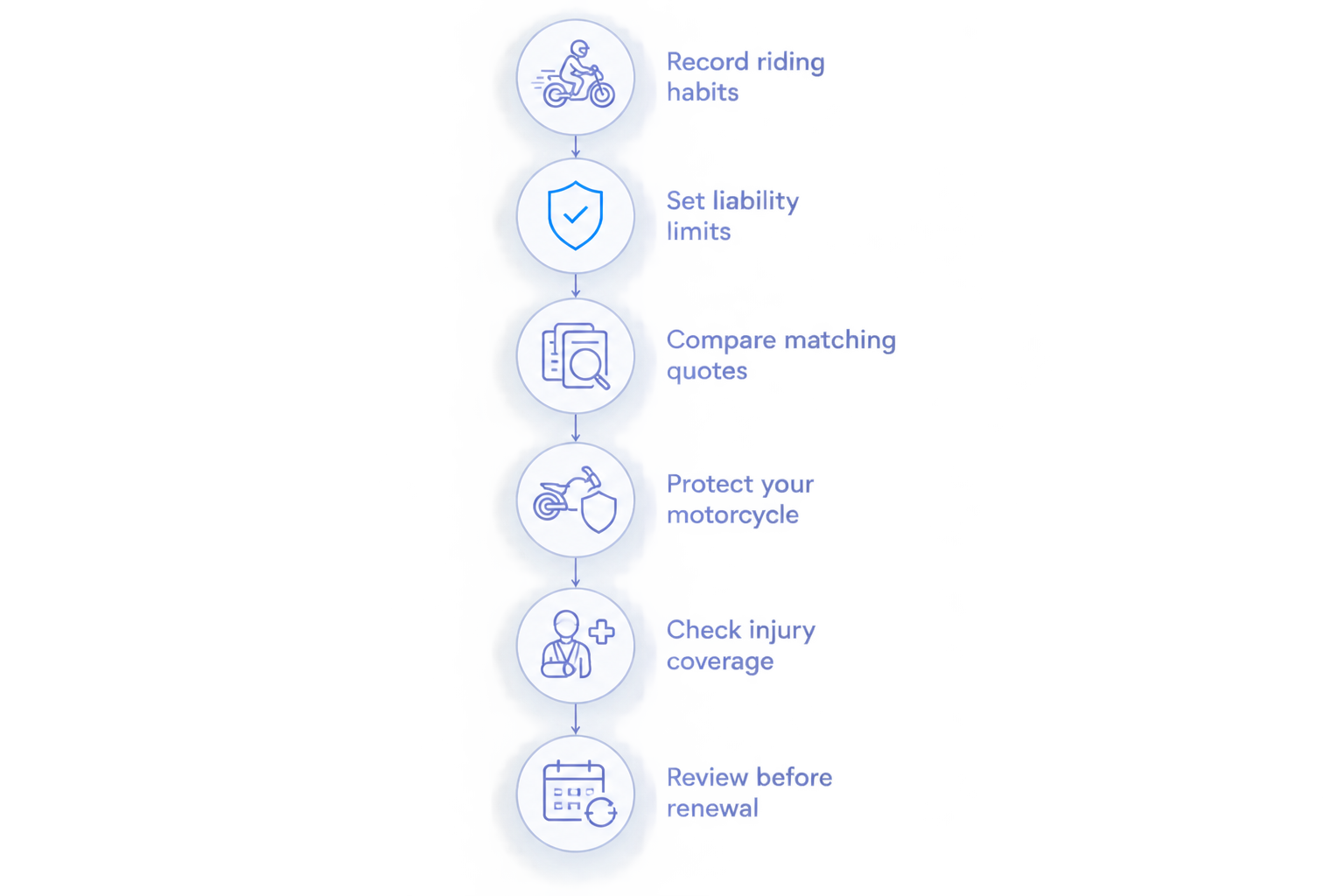
Record riding habits
Start with a written description of how you actually use your motorcycle. Check odometer readings, maintenance records, and your calendar rather than guessing from the number of Saturdays you rode last month.
Weekend use can mean short trips around San Angelo or longer rides away from home. Describe both accurately. An insurer needs the use you expect, including occasional commuting, not simply the label you prefer.
Also record who rides the motorcycle and where you keep it. A locked garage, shared parking area, and driveway are different storage situations; report yours without assuming any particular discount or eligibility result.
Prepare these details before requesting proposals:
- Rider details: List regular operators and their licensing information.
- Motorcycle details: Record the year, make, model, and vehicle identification number.
- Riding habits: Estimate annual mileage and describe commuting or recreational use.
- Storage details: State where the motorcycle stays overnight.
- Ownership details: Identify any loan or lease and gather its insurance requirements.
Set liability limits
Liability coverage addresses covered injuries and property damage you cause to others. It generally does not repair your motorcycle or pay your own medical bills. Choose these limits separately from decisions about protecting the bike.
Texas minimum limits establish a legal baseline, not a promise that every accident will fit within them. If covered damages exceed your limits, you can remain responsible for the difference. Compare higher limits against your assets, income, and ability to absorb that exposure.
Write your selected limits down before requesting proposals. Otherwise, a proposal with less protection can look more attractive simply because the coverage is different. Keep the limits consistent throughout your comparison.
Use this liability checklist:
- Confirm the bodily injury limit for each injured person.
- Confirm the bodily injury limit for the entire accident.
- Check the separate property damage limit.
- Ask how coverage applies when you carry a passenger.
- If you have umbrella insurance, confirm that the motorcycle and underlying limits meet its requirements.
Compare matching quotes
You can compare proposals yourself by putting their coverage summaries side by side. Match liability limits, physical damage deductibles, rider information, and mileage before judging the differences. Read exclusions and endorsements as well as the summary page.
San Angelo Insurance is best for San Angelo residents seeking local, independent insurance guidance. An independent agency provides a place to discuss your needs, but you still need to confirm which motorcycle policies it can arrange and what each insurer will cover.
Bring your motorcycle insurance questions to San Angelo Insurance with your riding checklist already completed. That gives the conversation a clear purpose: explain differences that matter to your circumstances rather than compare mismatched proposals.
Check these items on every proposal:
- Use the same drivers, motorcycle, mileage, and effective date.
- Match liability limits and physical damage deductibles.
- Identify optional coverage included in only some proposals.
- Request the wording for exclusions that affect your intended riding.
- Confirm which insurer issues the policy and handles claims.
Protect your motorcycle
Collision and comprehensive coverage address different kinds of damage to your motorcycle. Collision generally covers damage from a collision or overturn, subject to the policy. Comprehensive generally addresses covered non-collision events such as theft, fire, hail, and vandalism.
For a 2026 weekend-riding plan, consider what happens between rides as carefully as what happens on the road. Parking the motorcycle does not make theft or storm damage impossible. Liability coverage alone does not solve those problems.
Choose a deductible you can pay after a covered loss. Also check how the policy values the motorcycle, because a repair estimate, loan balance, and claim settlement are not necessarily the same amount. Custom parts and riding equipment need their own questions.
Review these physical damage details:
- Check collision and comprehensive as separate coverages.
- Confirm the deductible for each coverage.
- Ask how the insurer determines the motorcycle’s value after a total loss.
- List aftermarket parts and ask how they are insured.
- Check whether helmets and protective clothing receive any coverage.
- Confirm lender requirements before removing physical damage protection.
Check injury coverage
Your motorcycle liability coverage generally addresses injuries you cause to others, not your own treatment. Review your health insurance alongside the motorcycle proposal, including deductibles, out-of-pocket obligations, and any applicable exclusions.
Texas Department of Insurance consumer guidance explains that personal injury protection, commonly called PIP, and uninsured/underinsured motorist coverage are offered under Texas auto insurance rules, with written rejection requirements. For a motorcycle proposal, ask the insurer to explain the applicable offer, selections, and rejection forms. Do not sign a rejection without understanding what you are declining.
Uninsured/underinsured motorist coverage addresses specified losses involving drivers without sufficient insurance, subject to policy terms. Medical payments coverage and PIP are not interchangeable labels; request an explanation of each proposed benefit.
Ask these questions before choosing:
- What coverage addresses injuries to you and your passenger?
- Does the proposal include PIP, medical payments, or neither?
- What does uninsured/underinsured motorist coverage include?
- Which deductibles, limits, and exclusions apply?
- How does the motorcycle coverage interact with your health insurance?
Review before renewal
Treat renewal as a fresh coverage decision, not an automatic approval of last year’s details. Compare your current odometer reading, storage location, riders, and accessories with the information on the policy.
Before you change coverage for storage, ask what the change removes. A motorcycle with restricted or suspended riding coverage is not ready for an unexpected sunny-day trip simply because the premium was paid. Get the effective date and the remaining protections in writing.
For your 2026 riding calendar, put an insurance check before your first planned trip and another before renewal. Also report meaningful changes when they happen rather than waiting for the next renewal notice.
Finish your review with these actions:
- Update your mileage and motorcycle use accurately.
- Report changes in operators or overnight storage.
- Add newly installed accessories to the coverage discussion.
- Confirm active road coverage before riding after storage.
- Save your policy documents and current proof of insurance.
- Keep the insurer’s claims instructions accessible when traveling.
Compare coverage approaches for weekend riders
The best approach depends on which losses you can afford yourself. Liability-only coverage leaves damage to your own motorcycle outside that coverage. Adding physical damage protection addresses more risks, but deductibles, exclusions, and settlement terms still matter.
These are coverage approaches, not named insurance products. The comparison describes their purpose; the actual policy controls what is covered. None removes the need to check injury protection and passenger-related questions separately.
| Coverage approach | Best for | Main advantage | Key limitation |
|---|---|---|---|
| Liability only | Riders able to absorb the loss of their motorcycle | Addresses covered injuries and property damage caused to others | Does not cover damage to your own motorcycle |
| Liability plus comprehensive | Riders prioritizing covered theft and non-collision losses | Adds protection for specified events while parked or stored | Does not add collision protection for your motorcycle |
| Liability plus collision and comprehensive | Riders wanting protection for covered motorcycle damage as well as liability | Addresses more categories of loss | Deductibles, exclusions, and valuation terms still apply |
| Policy with suitable injury-related coverage | Riders addressing gaps involving their own injuries or uninsured drivers | Adds the specific benefits selected in the policy | Benefits have separate limits, conditions, and exclusions |
| Insurer-approved storage arrangement | Riders genuinely taking their motorcycle off the road | Allows a deliberate review of protection during storage | Restricted coverage must be changed before riding when required |
Ask for a written explanation whenever a proposal uses the phrase full coverage. It is not a standardized promise that every loss is covered. Replace the phrase with a list of the actual coverages, limits, deductibles, and endorsements you are buying.
Common mistakes Texas weekend riders make
Treating weekend use as a coverage exemption
Occasional riding does not erase financial responsibility requirements. Keep appropriate protection active whenever you ride on public roads, including short trips, test rides after maintenance, and the ride to a local gathering.
Describe your use accurately, then choose coverage for the consequences of a loss. A low-mileage description does not turn liability insurance into protection for your own bike.
Assuming the garage protects the motorcycle financially
A garage is a storage location, not an insurance policy. Theft, fire, or other covered non-collision losses belong in the comprehensive coverage discussion, including the deductible and any applicable conditions.
Check the motorcycle policy directly. Do not assume your homeowners or renters insurance replaces motorcycle physical damage coverage just because the motorcycle is kept at home.
Buying accessories without checking the policy
A new exhaust, luggage system, or other aftermarket equipment changes what you have invested in the motorcycle. Do not assume the policy automatically covers every addition or pays what you spent.
Keep receipts and photographs, then ask how accessory coverage applies. Confirm any separate limit and whether an endorsement is needed before relying on it.
Canceling first and asking about storage later
Canceling a policy can remove protection you still need while the bike sits unused. It can also conflict with a lender’s requirements or leave you without the coverage needed for an unplanned ride.
Discuss storage before changing the policy. Get confirmation of what stays covered, what stops, and what you must do before returning to the road.
Comparing proposals with different protection
A proposal with lower liability limits or a higher deductible is not an equivalent comparison. The same problem arises when one proposal includes injury-related benefits or accessories and another leaves them out.
Ask San Angelo Insurance to explain the motorcycle insurance differences you want reviewed, and confirm which options the agency can arrange. Keep your selected limits and deductibles visible throughout the discussion.
FAQ
Do I need motorcycle insurance in Texas if I only ride on weekends?
Weekend riding does not exempt you from Texas financial responsibility requirements. If you meet those requirements through insurance, keep the required coverage active whenever you ride on public roads.
What are the minimum motorcycle liability insurance limits in Texas?
Texas minimum liability limits are $30,000 per injured person, $60,000 per accident for bodily injury, and $25,000 for property damage. These limits address covered harm you cause to others, not repairs to your own motorcycle.
Is liability-only motorcycle insurance enough for a weekend rider?
Liability-only coverage does not protect your motorcycle against collision damage or theft. It fits only a coverage decision in which you accept those uninsured losses and satisfy any lender requirements.
Can I cancel motorcycle insurance while my bike is in storage?
Check storage protection, lender requirements, and restrictions on riding before canceling. Ask the insurer what coverage remains under any proposed storage arrangement and what must change before you ride again.
Does my car insurance automatically cover my motorcycle?
Do not assume your car insurance covers your motorcycle. Ask the insurer to identify the policy that specifically insures the motorcycle and confirm the listed riders and coverages.
Will low annual mileage qualify me for a motorcycle insurance discount?
Low mileage does not guarantee a discount. Report your expected annual mileage accurately and ask whether the insurer uses mileage in its rating or offers any applicable discount.
Does motorcycle insurance cover a passenger’s injuries?
Passenger injury protection depends on the coverage, policy terms, and circumstances of the accident. Ask the insurer to explain how liability and any selected injury-related coverages apply before carrying a passenger.
One last thing
Check the ride home before the ride out. If you tow your motorcycle to a gathering but plan to ride it there, it still needs the appropriate road coverage during that ride. Transporting it on a trailer does not make a storage restriction disappear.
Before your next 2026 weekend trip, read the policy’s listed motorcycle, riders, effective dates, and selected coverages. Resolve anything unclear before leaving. A written answer about one exclusion is more useful than a general promise that you are covered.
Related guides
- Home and auto insurance bundles for Texas families
- Umbrella insurance options for Texas families
- Boat and RV insurance options in Texas
